Tuesday, September 30, 2008

Top 52: Elite Beat Agents (#40)

This week's Top 52 features the best music/rhythm game that I have ever played: Elite Beat Agents. It is rare that in recent years a game comes out that is unique or a game that pushes a genre in a new direction. Elite Beat Agents accomplished both of those feats, at least for me.
------------------------------


Title: Elite Beat Agents
Console: Nintendo DS
Release Date: 11/06/06 (US)
Genre: Music/Rhythm
My Ranking: #40

Elite Beat Agents is special for two reasons. One, it takes the music/rhythm genre in a fresh, new direction, which after repetitive installments of Guitar Hero and Rock Band, is a breath of fresh air. Two, Elite Beat Agents makes excellent use of the stylus and touch screen. The developers really thought creatively of how to make good use of the DS functionality.

Elite Beat Agents (EBA) is a rhythm game. Numbers appear on the bottom screen on the DS and bigger circles close in on the numbers. You have to tap the number when the circle fits perfectly around the number button, which also coincides with the beat of the song. Sometimes the game will be tricky and place numbers all over the screen and you need to hit them in the right order and at the right beat. The more accurate you are with your beats, the more points you get. Miss enough beats and you fail the song. It's a simple concept that stays fresh throughout the entire game because it is so different.


Despite being on a portable system, the music comes out on the DS very well, especially with headphones. With each correct tap of the beat you'll hear a sort of clap noise or a beat sound that is reassuring and adds another dynamic to each song. The songs themselves are also surprisingly good, even with a lot of them being pop and overplayed. Chances are you won't even realize that the song is crap because following the rhythm is so much fun. Some songs (all covers) in the game include Madonna's "Material Girl" (meh), Rolling Stones' "Jumpin' Jack Flash" (awesome) and Jamiroquai's "Canned Heat" (the song that Napoleon Dynamite dances to -- crazy awesome).

The beat rhythms you have to hit are never just the straight rhythm of the song either. The game will mix it up and put different rhythms that fit musically but will definitely confuse you. Luckily, if you don't understand the game that well, or lack rhythm, the game's easy modes will ease you into the system while the expert mode will really challenge your focus and rhythm skills. Simply put, EBA has a very well-thought out difficulty curve that will appeal to all types of gamers.


The visual display of the game is also excellent. Rendered in a comic-book, anime-esque style, you are part of a team called the Elite Beat Agents. Whenever times are bad and someone screams for help, the EBA flies into the scene and does a dance to help the character in distress through a problem. One example of this is when a dog falls asleep accidentally on a truck and is taken away from his master. He barks for help and the EBA helps give him energy to hitchhike his way back home. When you mess up the rhythm, the EBA loses their beat and the dog may not make his way home properly. It's ridiculous for sure, but also cute and awesome.

I played this game on a flight to India that lasted about fifteen hours. I remember sleeping for about six hours and then playing this the whole rest of the plane ride. This game made the plane ride seem so short and I was hooked. I was constantly trying to increase my high scores, getting all perfect scores and getting a star next to each song (which I eventually did). My girlfriend, who would rather read than play a DS, borrowed/stole my DS away from me for three days just to play this game.

Seriously, it's the best music/rhythm game I have ever played. It was original, fun and difficult. A perfect recipe for my kind of gamer style.
------------------------------------------
My Top 52:
#52 --- Star Fox 64 (N64)
#51 --- Kirby's Adventure (NES)
#50 --- Roller Coaster Tycoon (PC)
#49 --- Grand Theft Auto III (PS2)
#48 --- Metroid Prime (GC)
#47 --- Halo 3 (Xbox 360)
#46 --- Bomberman 64 (N64)
#45 --- Guitar Hero II (PS2)
#44 --- Super Street Fighter II (GEN)
#43 --- Pokemon Puzzle League (N64)
#42 --- Soul Calibur II (GC)
#41 --- Gears of War (Xbox 360)*
#40 --- Elite Beat Agents (DS)
#39 --- Revealed on 10/07

*- Denotes highest rated game for that console

Review: Mega Man 9

Mega Man 9
Nintendo Wii, Playstation 3, Xbox 360


Overall score: 8.9
------------------------

Quick fix:
+++ Quite possibly the best musical score for any 8-bit game
+++ Nostalgic yet fresh level design
++ Challenging achievements and online leaderboards add replay value
++ Pinpoint control
++ Only $10 off Wiiware, PSN or Xbox Live Arcade
+ Downloadable content to come soon
+ Punishing difficulty feels reminiscent of old Megaman games

--Short
- Punishing difficulty will be off-putting to new players
- Downloadable content will nickel and dime the player for things that should be free
---------------------------


Mega Man 9 is not just a game with a retro-feel, it actually is a new retro game, if that makes any sense. Upon opening Mega Man 9 on my Wii, I felt as though this game was made in the late 80’s for the NES. The art, graphics, sound, control and gameplay all feel and look 8-bit.

Mega Man 9 is a 2D platformer and a shooter, just like the classic Mega Man games on the NES. One button makes Mega Man jump; the other makes him fire his weapon. Using these simple controls, Mega Man jumps over dangerous pits, shoots enemy robots and eventually reaches a boss at the end of the stage. Upon beating that boss, Mega Man absorbs the ability of that boss and can use that ability in other stages. Each boss also has a weakness to another boss’ ability; so once you beat one boss, you have a powerful weapon that can destroy another boss pretty quickly.

The set-up is pretty simple. Run through a stage; kill a bad guy, repeat. The gameplay doesn’t sound that impressive but the game really shines with the level design. Almost everything that can be done with 2D platformers has been done (excluding the upcoming LittleBigPlanet) so coming in, Mega Man 9 was going to have a hard time making 2D levels feel fresh. However, Capcom accomplished this feat wonderfully.

Mega Man 9’s level design is both genius and frustrating. In Tornado Man’s stage, there are rotating battery-like things that will carry Mega Man from one side of the level to another. Standing on top of one of the batteries causes Mega Man to rotate endlessly and if you jump off the battery when you are under it, Mega Man will just fall, most likely to his death. The trick is to jump off the top of the battery to land on another battery, all the meanwhile avoiding spikes and making very tight jumps. You have to near-perfect just to survive the level, which really appeals to hardcore players like myself.


The difficulty is both a pro and con of the game. Since Mega Man 9 is a 2D platformer, a player can see and understand the goal pretty simply, since the player knows which direction he or she has to travel. So even in the most difficult parts where you keep falling into the same death pit over and over again, you’ll keep trying because the goal is so clear. You know you’re failing not because of poor design, but because of poor execution. So when you do succeed, you will feel a sense of accomplishment, only to die at another point in the level.

The constant dieing can be enormously frustrating, mostly because when you die, if you didn’t make the checkpoint in the level, you have to start from the beginning of the stage. However, this is the nature of Mega Man games, and it always has been. The game is unforgiving and only rewards you if you play well. The only problem is that your version of playing well probably isn’t good enough for Mega Man 9. So if you enjoy difficult games, Mega Man 9 is a good choice. If not, you may throw your controller. That being said, if you play with it long enough, you will eventually beat it. It may be harder than most of the NES Mega Man titles, but with persistence, and a lot of continues, you will eventually get on top.

There are other things to enjoy with Mega Man 9 though. The soundtrack is quite possibly the best I’ve ever heard in an 8-bit game, only rivaled by other Mega Man games and the Castlevania series. All of the songs, even the stage select song, are incredibly well composed, catchy, complicated and groovy. I even have the soundtrack on my iTunes. The music blends well with the environments and often times, especially in the final stages of the game; you may stop and just listen to the awesome soundtrack.


Unfortunately, many people will probably not download this game because of the graphics. The graphics are made to look like something made on an NES, so you won’t get HD quality stuff. Don’t be discouraged by the graphics; the retro-look is what makes the level design possible and it’s colorful and pleasing to the eye. The gameplay will draw you in so much that even if you are a graphics orientated person, you’ll forgot about the graphics since you’ll be having so much fun.

Another plus of Mega Man 9 is its price. It’s only $10 off WiiWare, PSN or Xbox Live. Thankfully it doesn’t cost much more than that though, because the game is unbelievably short (45 mins-1 hour), even by old NES Mega Man standards. Having only eight bosses and four Wily stages was what Mega Man 2 had, but Mega Man 3, 4, 5, and 6 were all longer games and made over fifteen years ago.

This is made up for the fact that Mega Man 9 has downloadable content and online leaderboards. Once you finish the main campaign, you will probably dabble in the time attack mode, trying to beat any stage as fast as possible. Your time is recorded and you can compare your time with others on the leaderboard. It’s a small addition, but this addition adds a ton of replay value as you’ll play each level differently trying to shave off a couple of seconds on each run.


Mega Man 9’s downloadable content will include (as of this writing) a playable Protoman who can slide and charge his main weapon, two more difficulty modes, and endless attack mode, and a bonus stage with another final boss. DLC is always nice but some of these sting a little bit in terms of money. The difficulty modes cost an extra dollar each, and it feels like Capcom is nickel and diming you. Mega Man 2 had a harder difficulty mode in for free. I understand paying for things like Protoman but everything else feels unfair to the consumer.

Lastly, one more perk of Mega Man 9 is the achievement section embedded in all versions of the game. By doing certain feats in the game, you’ll get a message saying you completed an achievement. Some achievements include beating a boss only with your Mega Buster (very easy) or beating the entire game without taking damage (WTF!?). Again, you’ll play the game very differently just trying to get all of these achievements which adds more to the overall gameplay.

Mega Man 9 both appeals to the hardcore/Mega Man fanatic crowd and is accessible enough to newer players due to its simplistic controls. Mega Man 9 is proof that good gameplay and good level design still reigns supreme when making a fun game. Graphics simply do not matter when you are having so much fun. If you have $10 dollars to spare, pick this one up. You won’t be disappointed.

Overall Score: 8.9

Monday, September 29, 2008

The Virtual Reality Cocoon

I have no idea how long this has been in development, but oh man, this looks awesome. Just take a look at the picture below. Then, realize that this thing is a computer.


Forget about going crazy over a table top computer with multi touch, this thing is the future of computers. Though I can't imagine having this contraption in my living room right now, I can see it replacing the computer desk in the long run. Besides, it just looks so bad ass.

The way it works is that you can step inside the cocoon and the Internet can become a fully 360 degree world that you can walk around in. Suddenly, instead of viewing webpages about Paris, you can actually walk through a virtual rendition of Paris. Cameras inside the machine will read your movements and you can watch and move through the various websites. You can even go shopping in this cocoon. The reference the article uses (see the first link in this post for the jump) is imagine looking for a book in amazon, walking up to a virtual bookshelf, picking out the book you want, digitally previewing it, getting other customer's opinions about the book (who also happen to be walking around) and then purchasing it. Crazy.

Now of course, I see this thing and think how awesome this could be for video games. The article also acknowledges the potential of this machine. With motion sensory equipment and fully wrap-around visuals, a first-person shooter suddenly becomes the most awesome game to play. Imagine instead of having to press a button for cover, you actually need to dive to cover to remain from getting hurt. Even better, imagine a game like Elder Scrolls IV: Oblivion where you are parrying and attacking with a sword or standing at the edge of a cliff actually shooting arrows with a virtual bow. Yeah, I know, I'm geeking out right now, but damn, the potential of this is mind-blowing. With this technology, you can actually become a video game character.

Yeah, I think this may make the brain-reading controller I just talked about obsolete.

Video Games are Expensive

Raise your hand if you don't like video games. Raise your hand if you have too much money. Raise your hand if you don't have any hands.

Now, did anyone raise their hand? Wait, really? Please tell me it was for the third one! Oh... okay, well go away. Now for the rest of you. Would you like to save money AND still play new video games?


Cheap Ass Gamer Deals
Cheap Ass Gamer is a list of gaming deals. You get to buy games, and save money. This great website aggregates a bunch of ways you can buy video games cheap. Is Amazon selling Mass Effect for $35? Buy.com has 12 months of Xbox Live for $30? It's the SlickDeals of video games.

If you want to go a little deeper, you can browse through their gaming deals forum, lots of good stuff there as well. It's the FatWallet of video games.

Cheap Ass Gamer Game Trading
More Cheap Ass Gamer? Well, let's start calling it CAG for short. Another forum they have is a game trading forum. Don't trust mailing video games to random strangers on the internet in exchange for their promise that they'll mail you a game?

It's a good thing they have what's called an iTrader rating system. If you trade a game with someone, they give you feedback. It is essentially the eBay system, with no buying or selling. Wait, but people do buy and sell there too. There's no official safeguards in place, but gennerally whoever has less feedback ships first.

I have done a bunch of trades through this, and highly recommend it. Paying $4 shipping everytime you want to trade a game that you're done playing is so much better than paying $50 to buy that new game.


GameFly
If you don't know what Netflix is, you probably haven't heard of the internet. I never knew there was a print version of Table Salt Games... Anyhow, if you don't know, the way it works is this:

The entire catalog is online, and you add to a digital queue, or list of games you want, and they mail them to you. You have one or two out at a time, and as you return them, they mail you new ones. It's amazing.

Now, when I saw it's amazing, I mean Netflix is amazing, and I assume Gamefly works the same way, in all of its awesomeness.


Your Public Library
Did you know that you can check out video games from the public library. This one only works if you live in East Brunswick, NJ. At least, so Dr. Celestino tells me.

Old Video Games
Buying games that are one generation old is really cheap. If you go farther back, they're collector's items, but just one generation back, and they're old news, and people will get rid of them cheap. Graphics aren't good enough for you? They were for everybody else a few years ago.

If you're low on cash, but an Xbox, or a Playstation, hell, even a PS2, or a Gamecube. Play all the games you want, and pay roughly 10% of what all of your classier friends are paying. They'll make fun of you, but you'll have the last laugh, when you can afford non-ramen dinner. (Btw, if you're making fun of ramen, we're not friends)

Stealing
Stealing is wrong. And free.

Photo: Flickr

Godspeed.

Sunday, September 28, 2008

Telepathic Destruction... Part 2

One of my first posts on this blog was about a controller that could read the neural impulses in your mind and translate into an action on the screen. This story has really grown from two months ago, and has now reached reached mainstream news at cnn.com.


"Being able to control a computer with your mind is the ultimate quest of human-machine interaction. When integrated into games, virtual worlds and other simulated environments, this technology will have a profound impact on the user's experience."

I'm still concerned with the accuracy of the controller and with the price. Last I checked, the retail price was $169.99, which is just outrageous for a controller. Still, the potential for such a controller does have enormous capabilities, as it can provide a mechinism by which we could read the brain's thoughts and translate that into an action. I can completely see how this technology can become the controller of the future because if it is reliable, it will be much more intuitive than using a traditional controller.

Saturday, September 27, 2008

BC Advanced Strategies: Pretty Pretty Princess

What? Really? There is strategy for the infamous little girl dress-up game? Well, not really advanced strategy, but there are a couple of things you can do to increase your odds of winning.


Pretty Pretty Princess is a very simple game. You go around the board, using the spinner to move one to four spaces. Depending what spot you land on you get a specific piece of jewelry that you MUST wear. To win, you must get your color's bracelet, necklace, ring, two earrings and the crown. You also cannot win if you are in possession of the black ring.

The main allure of the game is that little girls get to play a simple game while dressing up with shiny plastic jewelry. However, some older kids play this game, including myself, because hey, sometimes you feel like dressing up in drag, you know? Well anyway, here's some strategy for Pretty Pretty Princess:

1. If you land on a "take any piece" tile, always take an earring if you don't have one. Earrings are the only piece that you need two of in order to win. Therefore, they are the most annoying to get. If you already have one you don't necessarily need to take the second one but if you have none, always try to fill up your earring requirement as fast as possible.

2. Try to get the crown last. The crown is the most volatile piece in the game since there is only one crown in the game. Whenever an opposing player lands on a "take any piece" space or a "crown" space, you can lose your crown. There is no other spot on the board where an opposing player can take away one of your pieces.

3. Keep the crown off the leader. If your opponent is one piece of jewelry away and they have the crown, take the crown away from them when you land on a "take any piece" space. This will probably buy you an extra turn or two to get the piece that you need to win.

4. On the "remove any piece" space, always remove the black ring or the crown. Obviously, you cannot win with the black ring, so if you do have it, get rid of it upon landing on the "remove any piece" spot. Sure, someone else could take the black ring from you by landing on a black ring spot, but taking it off on the "remove any piece" spot ensures that you don't lose any jewelry you've accumulated. If you don't have the black ring but you do have the crown, then remove the crown since that can also be taken away from you.

5. Don't have the black ring or the crown and you land on a "remove any piece" space? Look ahead on the board then. There's a 25% chance that you are going to move either 1, 2, 3, or 4 spaces. If you have to remove a piece then look four spaces ahead and see what you might land on. If you see a bracelet 4 spots away, you should take off the bracelet as you will have a minimum of two chances to land on that space. On your next turn, if you spin and hit a four you'll get the bracelet. If not, then you'll still be behind it and have a second shot to land on it. This means that over two turns, you have more than a 25% chance to land on the bracelet spot.


Lolz. I love that picture. Jeff looks so satisfied and Mike is so dejected. Ah, PLAY is awesome. Yeah, I know, I'm looking WAY too much into a very simple game. However, even the simplest games have strategy to them! Now you know how to dress up even faster in Pretty Pretty Princess.

Friday, September 26, 2008

Flashy Friday: 3D Logic

This week's Flashy Friday game is a cleverly built puzzle game named 3D logic. Simple in form and holding 30 levels, you'll be playing this for a couple hours. Chances are that you'll give up before reaching level 30. The game starts off pretty simple but there is a stark difficulty increase upon reaching level 16. Actually, I can pretty much guarantee you that you will be stumped at level 16.


The goal of the game is to create lines from one colored box to another. The green line has to touch both green boxes and the red line has to touch both red boxes. The lines cannot be crossed, and that rule will drive you bonkers. In the above example, just visualize connecting the purple box and you''ll probably see that you cut off all possible routes for either the green or red block.

The rules are simple but the strategy is intense. My only suggestion to help you out is to find routes that enable the lines to go around other set colored blocks. Usually this involves taking the long way around. Sometimes that can be the answer for a tricky puzzle.

Click here to play 3D Logic.

Wednesday, September 24, 2008

Can a computer think?

As far as I know, computers can only be as smart as humans make them. We can program them to "think," as we have when creating a super computer that can beat the best of chess players. However, if you ask a chess playing programmed computer to do math, it will be unable to compute it if it does not have the right software.

Even computer AI characters don't think in the common sense. They are programmed to do certain actions under certain situations. By no means is this reason; it's all in the code. The code however can mimic thinking so that from the user's perspective, it looks as though the AI character is thinking.


Why is this important? Well, considering that I'm making a game (based off the lego labyrinth), I will eventually have to create AI characters. Luckily, I'm using a program called Virtools that allows me to use various scripts to create characters, so I don't need to code from scratch (I only know basic Java, HTML, and a little bit of C++).

Simulating human thinking can be tricky though since no human is ever completely correct. Sometimes, even the best thinkers make mistakes. However, what level of mistakes is considered human-like? Make a computer character do too many mistakes and the player will think the AI is flawed. Make a character be too smart and the game will become impossible. I guess the only way I'll be able to find the balance is by simple trial and error, which is also time consuming.

Gah, too much thinking, I'm only human.

Super Smash Bros. Brawl Web Series

Now this is an odd cookie. A new web series came out yesterday that takes a dark look at the events leading up to Super Smash Bros. Brawl. The series is completely serious despite the funny nature of Nintendo's characters. The editing, acting and script are all surprising good, despite the weirdness of the characters' looks. I'm not sure how I feel about this one though; it feels so foreign and tries to be everything that Nintendo isn't: hardcore.

This episode is pretty long (12 minutes). So, only watch it when you have the time to spare. Give it a chance though, you'll be surprised at the level of quality. Please note however that the video is only made for people over 17. Yeah, seriously, no joke.


BRAWL - Episode 1 : Twilight Ruin from There Will Be BRAWL on Vimeo.

The cameo at the end is pretty awesome. What an interesting spin on a loveable character. Is this web series a good idea? Or am I just crazy enough of a Nintendo fan to think this is interesting?

Tuesday, September 23, 2008

Top 52: Gears of War (#41)

Gears of War almost made me buy an Xbox360. Forget Halo 3, this game IS the system seller. Gears of War is the highest rated Xbox360 game on my Top 52 and that's partly because I don't own an Xbox 360. Still, I think it's impressive that two Xbox360 games made my top 52 favorite games of all-time despite not owning the system.
-----------


Title: Gears of War
Console: Xbox360
Release Date: 11/07/06 (US)
Genre: Third-Person Shooter
My Ranking: #41

Cooperative campaign mode. I could end this review right there and that would explain why I loved this game so much. Sure, plenty of other shooters have had co-op before but never did I enjoy myself with a shooter as much as I did with Gears of War.

The co-op was dynamic for a number of reasons. For starters, the level design seemed to be built for two-players. Wide area maps really allowed two people to spread apart and flank the enemies and you feel as though you are "trading off" bosses when in a boss fight. Usually the boss stays only on one player, letting the other player move and deal some massive damage.


There was always enough cover for the player to utilize and they were strategically placed so that you could gradually move up the level and get a better shot. Then, in some of the levels, they would have an enemy wave appear from the side you came from and the level would invert so you would have to use the cover from the opposite side.

In co-op you were always faced with a choice in how to work with your partner. Flanking is always a good idea but if you happen to die, then the other player needs to dash across to where you were in order to revive you. (Reviving is somehow magically done by a player picking a fallen player up). If you stick together you give the enemies one target but you can constantly revive each other and avoid a game over. It a simple choice but, the choice you make on how to fight will change how the AI enemies approach you.

There is a story in Gears of War but do you really care about the story in a shooter? Some people thought the story was really interesting; I just saw it as another generic "aliens (the Locust in this case) attacking! We must fight back!" I didn't expect much of a story though, so I wasn't disappointed.

However, for me to like a shooter, there needs to be a solid engine and control scheme. This is where Gears of War truly shines. Instead of just standing behind a wall and strafing the whole time, there is a very sophisticated covering system in Gears of War. Anytime you see any sort of barricade you can press the action button to fall behind the cover where you can do a variety of different moves.


For the cover position you can dash out from the left or right, stand up and fire, blind fire from the left, top, and right sides, back off the cover, or jump over the barricade, Rambo style. So instead of just standing behind walls or ducking, you can really get involved with the environment and use just about anything for cover. Thankfully, the camera is also reliable. You will probably get a good view of the battle from where you are crouching/hiding.

I remember first playing this game at my friend's dorm two years ago and just blasting through the campaign in about two or three days. I was disappointed when it was over not because the game was bad but because I wanted more. Wanting more at the end of a game is both a good and bad sign since it was too short but the gameplay rocked. I can't wait for Gears of War 2. I will tear apart that game at my friend's dorm again.
------------------------------------------
My Top 52:
#52 --- Star Fox 64 (N64)
#51 --- Kirby's Adventure (NES)
#50 --- Roller Coaster Tycoon (PC)
#49 --- Grand Theft Auto III (PS2)
#48 --- Metroid Prime (GC)
#47 --- Halo 3 (Xbox 360)
#46 --- Bomberman 64 (N64)
#45 --- Guitar Hero II (PS2)
#44 --- Super Street Fighter II Turbo (GEN)
#43 --- Pokemon Puzzle League (N64)
#42 --- Soul Calibur II (GC)
#41 --- Gears of War (Xbox 360)*
#40 --- Revealed on 09/30

*- Denotes highest rated game for that console

Sunday, September 21, 2008

Review: Metal Gear Solid 4

Review: Metal Gear Solid 4

Score: 8.2

-------
Quick Fix

+++ Astonishing level of graphics, sound and presentation
++ Lots of options for both stealth and action gameplay
+ Unique and challenging boss battles
+ Two of the most intense and well crafted on-rails sequences in the history of games
+ Once the controls are mastered they prove to be very well done
+ Powerful and satisfying end to the MGS series

-- Too many cutscenes, not enough gameplay
-- Design of the game seems to favor gunning down everyone over being stealthy
-- The later three "Acts" seemed watered down in terms of gameplay
- Frequent and annoying load screens, and install times for each Act
- Controls have a bit of a learning curve
- Absurd level of fan service can alienate a non-MGS hardcore

--------

Metal Gear Solid 4 is the final chapter in the story of Solid Snake. Snake's got a lot of expectations on his shoulders - people are touting MGS4 as the flagship exclusive title for the Playstation 3 and the one that will put it over and beyond the Xbox 360. It has been hyped since before the console was even released with numerous trailers showcasing its groundbreaking presentation values and teasing at vital story points. But does it live up to the hype?

It depends on what you expect out of the game.


Snake's final chapter starts off with his monologue about how "war has changed" with his stealthy entrance into a battlefield in the Middle East. From the beginning it is obvious just how spectacular the game's production values are. Everything from the textures to the motion capture to the realistic movement of cloth showcases an astonishing level of realism. There are moments where a character looks Snake in the eyes and I could almost swear I was looking at a real person. The level of realism brings about a powerful sense of immersion in the game.

What breaks this level of immersion, however, is what happens right when the opening scene of the game ends. After Snake finishes his monologue and gets off the truck he snuck onto, the game displays your health bar and finally gives me command of Snake. I'm more than excited to start after that 15 minute cutscene prepped me on my objectives and all that was at stake. I walk around to get a feel of the controls and crawl under a truck to progress...and watch as the screen fades into another cutscene. The 10 minute cutscene to 2 minutes of gameplay to another cutscene cycle happens numerous times in the first act, which just proved to be frustrating. Not only are cutscenes long, but they are frequent do a nice job of cutting up gameplay and taking you out of the experience. I don't mind a long cutscene after an intense firefight to help me relax and prepare for the next sequence, but a lot of times simply walking half-way toward your next checkpoint will cue the next cutscene. I had a number of "why can't I do that?" moments as I watched Snake tactically take out guards in a cutscene, where I was playing just a moment ago.

Another way the game removed me from the experience is the frequent load screens. Before and after each aforementioned cutscene there is usually a loading screen, which can take anywhere from 5 to 15 seconds to complete. Perhaps I've been spoiled by no-loading games like Grand Theft Auto 4 and Burnout Paradise, but it still felt like it jarred me out of the moment for a few seconds. What worsens these load screens are the mandatory installs. Now the Playstation 3 is notorious for forcing the user to install parts of the game when you first play - that's annoying enough as is. But MGS4 prompts an install screen on EVERY ACT. These install screens can range from 3 minutes to 15. Since pretty much every act ends on a large cliffhanger, having to deal with a long wait screen to see what happens next can be painful.

The loads screens particularly took me out of the experience during one of the best parts of the game. An on-rails type shooter sequence, two in fact, that are executed just about flawlessly. They felt like chase sequences right out of a movie - intense, well choreographed, and down-to-the-wire. During one sequence the player must protect himself while protecting another car while shooting down both land and air-bombing enemies - it was just fantastic. But again, after every minute or so of gameplay the game would fade into another 10 second load screen, which just hurt the experience.

These sequences worked so well in part thanks to the new control system. While it takes a bit of getting used to (in particular with close-quarters-combat), once broken in the system works fluently. Aiming felt accurate and easy to target with, especially with the semi-auto-targeting system.


As for the gameplay, I felt that it could really be a mixed bag. The game still gives you a lot of options for being stealthy, a staple of the MGS series. You can hide in barrels, throw playboy magazines to distract enemies, play dead, or just tranq the guys before they spot you. Snake's new OctoCamo system allows him to blend in with whatever he's pressed against by merely standing still for a few seconds. While this system is a great overhaul from MGS3's camo system, where you had to shift through menus every time you wanted to blend in with your surroundings, I felt it made things a bit too easy. Whenever I was in danger I could just lay down, blend in with the ground, get a 85% camo index, and the enemies would never see me unless they literally walked into me. And if they got too close, I could just pop them before they could radio in reinforcements.

The stealth options weren't the main problem I had - it was really the numerous options when you get in a firefight. Early on in the game you meet an arms dealer named Drebin, who gives you laundered guns and ammo in exchange for points. The problem here is you can access his shop ANYWHERE after you meet him - you simply pause the game and select his shop. Running low on ammo? Pause the game, buy 600 bullets, unpause, problem solved. Suppressor wearing out? You can buy some from him too. Need a sniper rifle to handle some far off enemies? Voila, 3 seconds later a sniper rifle appears in your hands.

What complicates the problem further is how you get points - you get them in exchange for enemies' weapons. In other words, the game pretty much rewards you for wonton enemy killing - you keep their ammo and sell their guns for points, which you can use to up your own arsenal. Kill enough enemies and Snake becomes a virtual Fort Knox and an unstoppable war machine - Drebin stocks everything from shotguns to grenade launchers to claymore mines. In past MGS games you had to be stealthy to preserve ammo and save it for tricky spots, but in MGS4 you're pretty much encouraged to kill all you want. You get no bonus for being stealthy except for a low amount of bonus points at the end of each act.

I was really discouraged by this system - it really killed the stealth aspect of the game for me. A simple remedy could have been Drebin only having a limited stock of items, or only being able to call him when not in a firefight, or having to rendezvous with him at an obscure part of the map to get supplied; any of these options would make the system less broken. It was not well thought out and pretty much allows the game to become a complete third person shooter if the player desires.

While the gameplay was strong in the first two acts, everything seemed much more watered down afterwards. Act three mostly consisted of one stealth sequence while stalking a person for far too long to be enjoyable,followed by a rail shooting sequence, followed by a boss fight. Act four had little gameplay and was the most massive piece of fan service I've ever seen (I will come back to this in a minute). Act five was literally two boss fights and a walking sequence. The first two acts were pretty large and had some interesting gameplay elements, such as befriending certain militia squads by helping them take out other squads. You could also get disguises to look like a squad to get their favor even easier.


One thing all the acts share in common are the amazing boss battles. While perhaps not the strongest set in the MGS series, these battles are well thought out and can be intense. In one fight the boss disguises himself as parts of the environment and, if you can't find him fast enough, will lunge at you viciously. It was one of the few moments in a game where I was legitimately a bit frightened. Several of the fights involve more than just gunning down the boss; it takes a bit of thought to figure out their weaknesses and defeat them proper. If you've played a MGS game you know there's at least one battle involving the giant Metal Gear mechs, and all I'll say is the one in this game is by far my favorite in the series.

What bothered me about the game a bit is the absurd level of fan service evident in it. While I'm a diehard MGS fan, the game proved to be self-aware and referenced itself and the 3 games before it too much for even me. In the first conversations in the game characters bring up plot points they seem to assume you know from the previous games. It made sense to me but I could see it really running circles around someone new to the series. By the end of the game things are explained well for the most part. This isn't before Act 4, however, which is the most over-done piece of fanservice I've ever seen. The entire area is modeled after a place visited before (I won't spoil it). Everything from the conversations to what I call "nostalgia triggers" - parts of the area that force Snake into a flashback narrative by simply stepping near it - is just going way too far. I feel that this excessive amount of self-reference would really alienate or confuse someone new to the series.

All that being said, this is definitely not a game for everyone. If you can't stand constant interruptions for cutscenes, loading screens, and install sequences, this game could very well drive you mad even with skipping the cutscenes. If you can look beyond the flaws, however, you can see that MGS4 is one of the best produced games this generation and is a gem in its own right. I recommend this completely to anyone who's played the first three - this game is pretty much custom tailored for just you. If you're new to the series get ready to be confused a little by the storyline, but give it time, it'll make sense by the end. The end in itself is a powerful and emotional ending that does the series the justice it deserves. I recommend playing the previous 3 games first to enjoy the ending to the fullest. I really want to say MGS4 is an amazing game, but I can only say that it is an amazing game in certain respects. There are just some crushing gameplay problems I had that prevent me from giving it the highest recommendation. If you have a PS3 or are a MGS fan, this is one experience you should at least give a try.

Overal Score: 8.2

Credits: Gametrailers.com for opening, IGN.com for images.

Lego Labyrinth

In my last post, I briefly mentioned Jorge Luis Borges' piece called The Garden of Forking Paths. I had to read that piece not only for my Digital New Media class but also for my Game Production class. In terms of game production, we were supposed to read that piece and then make a similar labyrinth to the one that Borges' character goes through. In order to get through the maze in the story, Borges' character must go always make a left turn to get out of the jungle maze.

My maze is a little bit more complicated, influenced by my times playing The Legend of Zelda. My goal was to completely disorient the player, in a circular maze that turns. The goal of this assignment was to make a 3D physical model of a labyrinth which we will eventually port into various programs to make 3D model on the computer.

I don't have a lot of skill in making 3D models using art supplies, so I went with something a bit simpler: Legos. Legos have their limitations, but they were sufficient enough in showing my prototype for a labyrinth.

Below is a video demostration of what my lego labyrinth looks like and how to solve it. It's also posted on YouTube. My video recording skills aren't amazing, so if you can, please excuse the poor quality.


I would like to get some feedback on this labyrinth. If you can suggest improvements or a different design, please let me know. Keep in mind that the "player" will most likely be in first-person (like Halo) or third-person (like Zelda); the top-down view is just for the ease of recording. Unless of course, you think I should keep it top-down and make a puzzle oriented game.

Much thanks to Lima and Garrett for helping me record this video.

Microcosmos and Borges

I saw this AMAZING movie in class the other day called Microcosmos. This French film is unlike anything I have seen before. All of the video taken for this film was done by a tiny robotic camera that watched the lives of insects for two years. The camera is all cracked out with HD equipment too; every movement looks so crisp and beautiful. Check out the trailer first.


Upon seeing this movie, I realized that bugs lead such interesting lives on the ground and that they feature a surprising number of human characteristics. The bugs fight, work together, and even lust each other from time to time. They have their own little world that we just never see.

I immediately thought how awesome of a video game this setting would make. Imagine taking the first-person view of a bug interacting in an insect world filled with creatures all doing various things. There would be no need for verbal communication between the bugs, just expressions and actions. Exploring the micro-world as a walking insect and flying insect would be an amazing game to play and watch.

I also found this clip on YouTube that I just had to share. Be warned though, this particular insect will make you think he is cute.


I don't know how this camera didn't disturb the insects but, I'm glad it didn't, because the images in this film are beautiful.
-------------

The second movie I saw in class was a documentary on Jorge Luis Borges. I talked about Borges briefly in a previous post. Borges is a famous novella writer who helped define what makes a "hypertext" novel which, simply put, is a novel that can be read multiple ways and be connected to multiple tangents.

The video below isn't from the documentary I saw but you can get a sense of what "hypertext" means by watching how this animator combined images to convey connectivity. The music is also deeply tied with the video.


Borges himself is a very strange man. He was strange not only because of his writing style but because he thought like a video gamer before there were video games. (The Garden of Forking Paths, his most famous labyrinth story, was written in 1941). Borges said in the documentary that when he's writing a story, he knows the starting point and the goal; the rest, he said, you have to invent. Gamers are often presented with the same scenario. You're introduced a character and you're told that you have to save the princess. The rest is made up by jumping over goombas (possibly in a big green shoe) or by going into pipes.

Borges also didn't enjoy writing long passages. He liked short stories so that he could get to the point. Borges liked the constant action in his pieces, much like video gamers expect when playing games.

If Borges were still alive today, I'd bet you he have some awesome ideas for labyrinth design.

Saturday, September 20, 2008

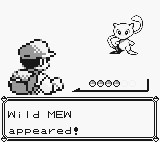
VG Advanced Strategies: Catching Mew in Pokemon Red/Blue/Yellow

If you're a Pokemon addict you probably already know about this trick where you can catch Mew in Pokemon Red, Blue or Yellow. If not, you may be surprised to know that Pokemon #151 is actually not that difficult to catch, you just need to confuse the game a little. The video below is a complete demonstration of how this feat can be done but, just to save you some time, I'll tell you what you'll need beforehand.

You'll need to be in Cerulean City. You need an Abra, which can be caught in the grass north and south of Cerulean City and you'll need a Pokemon that can put Mew to sleep; which can be your choice of Bellsprout, Butterfree or Jigglypuff at that point in the game. This trick only works if you didn't defeat certain random Pokemon trainers. So if you're using a completed game file, this probably won't work. I suggest starting a new game and get to Cerulean City. Then, watch this video for step-by-step instructions. (If you have all of the above requirements, then skip to 1:39 in the video).


NOTE: If you'd rather read a walkthrough, check out this detailed Gamefaqs walkthrough that I used when I caught Mew.

Why is getting Mew so great? Well, you need him in order to get a complete Pokedex, for one thing. Normally, the only way to get him was to win certain Pokemon tournaments that were held in Japan for the most part. Mew can also learn ANY move in the game. With various TMs, Mew can be an unstoppable force.

I've done this trick on my cartridge and it doesn't negatively affect your game at all. My only suggestion for the video is that you should beat all of the trainers in the area north of Cerulean City beforehand except, of course, for the two you need in order to do the trick. This way, you won't accidentally face the wrong trainer.


Now go get your old Gameboy and catch em' all! For real this time!

Friday, September 19, 2008

Science Scrabble

Don't get scared off by the word science, I'll explain how you can play '[insert theme here] Scrabble' if science isn't your thing. (Though it should be, it's fun!) My friend Aviv and I have developed these rules for just over a rule, tweaking them as we go.


All you need to play this is a standard Scrabble set, and someone who shares a common field with you which has a expansive vocabulary list.

Science Scrabble follows all of the normal gameplay rules of Scrabble, but expands the vocabulary allowed. In the case of science, a lot of these words are allowed; proteins, cyanide, arsenic, methane, etc. However, some words are not; deioniser, grignard, hbonding, nbutane, etc.

In addition to these words being allowed, you get special science points for using these words, and you keep track of these points across multiple games for a set period of time (or games if you'd like). A six-letter word is worth one point, and every extra letter is another point. HALIDE is worth one point, whereas DEPROTONATED is worth seven points.

Blanks don't count for science points, so if you have STyRENES, that is only worth seven points, whereas if the blank wasn't used it would count for eight. (Note: listing a word in all uppercase, and blanks in lowercase is standard Scrabble practice.)


Five-letter words count for 0.1 points, and cannot be repeated during a round of Science Scrabble. The first time I write AMINE I get 0.1 points, but if my opponent or I play that during the same game, or any later game, it isn't worth anything. A six or seven-letter word with one or two blanks respectively is counted as a five-letter word.

The last rule is that if you lose a game by 100 points or more, any science words you played don't earn any science points that game. This is to prevent players from fishing for science points without worrying about the real game.

Depending on how expansive your chosen field is, you can spice things up. For instance, we allowed elemental symbols to be used, which really expands the allowed 2-letter word list. (There are a lot of elements.)

That's it; this is great for gambling on, if that's your thing (it's mine). I recommend keeping track of your score in an Excel document if you're playing online, or if you're always playing with the same set, just keep it on a piece of paper in the box. A sampling of the scorecard between Aviv and I is below. If you want a full view of this round's scorecard, click here.


I told you previously that I would explain Science Scrabble, and now I have. Next up, Anagram or Crapple?

Photo: Flickr
Photo: Flickr
Photo: Flickr

Godspeed.

Flashy Friday: Bowmaster Prelude

I never liked "Defend your Castle" style games but this one I could not help but enjoy. Bowmaster Prelude has you defending and taking out a base. Your main weapon of choice is, of course a bow. There are different settings you can use to aim; my favorite is an easier setting called point aim where you can just click and the bow will fire.


You don't necessarily have to take out the opposing base in order to win, you just get a lot of points for doing so. The main way to win each level is to take out the enemy waves one by one with your bow and the troops you buy. Each time you kill enemies you get more money to buy powerups and you level up over time to increase your bow power. The powerups are really awesome too. You'll eventually get comet arrows, thunder arrows and a crapload of troops at your disposal.

With all "defend your castle" games this can get pretty addictive. You'll want to get all the powerups to destroy your opponents. What's nice about this game though is that there are different difficulty settings that you can change at any time. So, you can choose to make this a casual game where you take out soldiers and wyverns pretty easy or you an choose to make this game pretty hardcore for a challenge.

Either way, you may hate me for taking away hours of your life to this game.

Click here to play Bowmaster Prelude.

Wednesday, September 17, 2008

FFXI Boss: Eighteen Hours to One Minute

If you've ever played Final Fantasy XI you are aware of its relentless difficulty and how unforgiving the game is when you happen to die (you lose exp). Sometimes the game is just unfair. That was the main draw of the game however; there's no doubt that it is hardcore.


Sometimes though, the bosses in the game are a little too ridiculous. Kotaku reported of a group of players that tried to take down one of the hardest bosses of the game, Pandemonium Warden, and failed after 18 hours. Yes, that's right, they played for 18 hours and could not beat him. Worried about their health, the group called it quits.

Square Enix got a TON of bad press for this, so they nerfed all of their bosses, imposing a time limit of two hours to beat them and lowering the bosses' stats. After this change, the same guild took on another epic hard boss named Absolute Virtue that also has taken player's into marathon gaming. The result? Well, see for yourself.


Yeah, it now only takes one minute to beat with the right equipment and classes. I have to give credit to this guild though, BeyondTheLimitation (ironic name for this story), because they put in a lot of prep for this battle. Almost everyone in their group are max level Dark Knights with Kraken Clubs. Dark Knights have an ability that takes 10% of their HP and converts it into damage for 45 seconds. Then, they stacked that ability with their special 2-hour cooldown ability that drains and absorbs HP per hit for 30 seconds. So you have a system where on every hit, you're taking HP away from yourself and turning into damage and then absorbing it back from the enemy.

On top of that, the Kraken Club is a super rare weapon that can hit up to 8 times in a single round. Then, you have every Dark Knight with two hastes on them, which increases their attack speed. It was a well-thought out rush.

These guys got lucky though. Had the battle gone on any further, all of their special abilities would have run dry and then they would have to rely more on mages, which would be difficult since most of them were Dark Knights. Still, they had an excellent strategy, and it thankfully worked. Bravo.

I think it's great that Square Enix imposed a time limit, but two hours is too little and the bosses have been nerf a little too much. FFXI prides itself on being hardcore. Players with the best equipment in the game should be able to take down epic hard bosses efficiently but, one minute? That's a little too easy. I'm not sure how long the time limit should be, maybe 5 hours? Even that's ridiculous in video game standards, but MMORPG end-game bosses should be for the people who have no lives. Sometimes, it's not that bad to appeal to the insane.

Tuesday, September 16, 2008

Digital New Media Timeline: (#1, #2)

One of the blog posts I have to do for my Digital New Media class is keep a timeline of the readings so that we can see the progression of digital media over time. Today you guys will see #1 and #2. The readings (for this week at least) are actually really good, as they come before the explosion that was digital media yet they embody the elements of digital media.


#1- The Garden of Forking Paths
Jorge Luis Borges, 1941
--Helped define a hypertext novel. Read in different ways, Borges' character can be cold-hearted, patriotic or downright evil.
--Effectively used a labyrinth and a maze to represent the troubled nature within the character. Basic levels of game design are seen within the garden.
--Without using animation, Borges created a highly surreal environment with the garden.

#2- As We May Think
Vannevar Bush, 1945
--One of the main creators behind the US Military Industrial Complex during WWII in 1940.
--Seemingly foresaw the future with the reduction in size in technology and the multi-functionality of technology.
--Developed the idea of MEMEX, which was a more effective way of storing information before computers.

It's important to note the dates of these pieces. They were incredibly revolutionary for Digital Media despite not revolving around computers or technology.

New Media, Web Serials, and the Internet

Being that it's the beginning of the school year, almost every class has proposed the same question: What is x? How can we define x? Replace x with either hacking, game production, digital new media, or communication and you have all of the classes I'm currently taking at NYU.

For one class, Digital New Media, the reader proposes not one but, eight propositions as to how new media can be defined. One of them was "new media as the mix between existing cultural conventions and the conventions of software." It's a very convoluted definition but I guess it works, kind of. My immediate thought upon seeing this definition was that video games and computer games don't fall into this category. However, the reader covered his tracks on that one.


"Computer games are one of the few cultural forms "native" to computers; they began as singular computer programs (before turning into a complex multimedia producitons which they are today)--rather than being already established medium (such as cinema) which is now slowly undergoing computerization."

I'm still confused about this definition though. Does this mean that video games are a type of media? Sure headsets and online communities have created a method of communication for gamers but are old games like Spacewar a form of media? I always thought media involved some sort of communication sharing, which doesn't happen in video games unless you count the interaction with the software or the interaction between players. I think maybe the term "media" has been broadened a little too much. I like it though, gives me an excuse to talk about video games in class.


Not everything in Digital New Media can be related to games though. Which, I GUESS is ok. Another piece I had to read was on Web Serials. Web Serials are essentially online television shows that aren't restricted to the standards of television. The Guild, Ask a Ninja and Dr. Horrible's Sing-Along Blog all count as Web Serials. I never find out about these things until months afterwards they were popular mostly because I don't care enough to be committed to them. I love the Indie nature of these shows but honestly, I'd much rather play video games or watch Sportscenter.

Their popularity online is uncanny though. An article I had to read for class kept mentioning a web serial called lonelygirl15, which was essentially a pretty girl with a webcam. Seriously, I don't understand how such boring things get to become so viral. Lonelygirl15 had a massively long life too, spanning episodes for over two years. I understand that the quick-hit nature is part of the draw but over 2,500,000 hits for a girl with a webcam? Come on. At least The Guild had good writing.

Speaking of Web Serials, there's a new one coming out via MTV called The Engine Room. Did you hear about it? Probably not since it's ANOTHER Reality TV show from MTV. I only heard of it because of my professor. This shows pits college students broken up into four teams to see who can produce the best digital art. It's an interesting concept but I have a sneaking suspecion that MTV will somehow ruin it, possibly by trying to turn it into another Real World.

Thankfully, the episodes will only be about five to seven minutes in length, meaning MTV won't have much time to get into the personalities of the students, which will hopefully cause them to focus on the digital work. The prize is pretty neat too. The winning team gets $400,000 and they get to control the big MTV screen in Times Square for one night. I can't think of a better way to show off your digital art talent. I don't plan on watching the show; I would like to see the final project and what they do at Times Square though.


Lastly, we watched a video in class that showed the history of the internet up to about 1999. I didn't retain a lot of the information but it was interesting to see how many people genuinely worked together just to make a fast-moving communication system.

What I found especially funny was that, for the most part, telephone companies didn't see the birth of computers and the internet as helpful or threatening. If I was a business owner and I heard someone is making a product that could potentially be faster and better than mine, I'd be pretty concerned, even if I didn't understand it. Anyone in the field of tehcnology has to both fear and embrace new technologies. Who knows what will be the next standard? Something will eventually eclipse the internet; we just need to keep our eyes open.

Bingo and Ryan

I saw two computer animations in my Digital New Media class that really blew my mind the other day. The first I saw was a animated short called Bingo. The animation was actually based off a skit that the Neo-Futurists did in Chicago, which I thought was very odd since the Neo-futurists are very um... off-beat. I've seen them both in Chicago and New York and if you're ever in one of those cities you REALLY should check them out; they are a lot of fun. They attempt to do 30 original plays (more like skits) in 60 minutes. It's awesome.

Bingo, an animation made by Chris Landreth, takes the skit and beautifully animates it, really capturing the strangeness of Bingo the clown, and the Neo-futurist attitude of being deep and whacky at the same time. I'm not an animator but, one has to marvel at the level of detail in the character's faces. The characters look and act so real (even though it's clearly fantasy). One look at this video and there can be no doubt that digital animation can be art.


If you thought the above video was crazy, wait until you see the next one called Ryan, also made by Chris Landreth. Ryan is another off-center animation piece that looks back on the life of a famous digital new media artist named Ryan Larkin. Ryan Larkin was most known for making an animated short called Walking, which is briefly shown in Ryan. Ryan Larkin was influential in making digital art an accepted art form, and once you see the video biography, you'll see why.

Ryan isn't a straight up documentry however. Landreth himself is a fantastic animator and he animates his conversations with Ryan, which if heard alone without the animation, would be pretty intense. The deterioration of their faces though, covered with other digital animation is not only creative, it's trippy. Ryan's story admittedly is sad since he fell to drug and alcohol abuse and passed away pretty recently in 2007. However, the success of Ryan has kept his legacy alive and now tons of people are aware of his outstanding work. Ryan is shown below.


Most of the poeple who read this blog are gamers. And as a gamer, I have a question for you. Would you like to see this style of animation in your video games? Graphically, it may be hard to render but one has to consider how beautiful an adventure game would be in a Landreth style.

Top 52: Soul Calibur II (#42)

Soul Calibur II is the highest traditional fighter that I have on my Top 52 list. This was a game I did not expect to love, but once I started playing it, I simply could not put it down.
------------------


Title: Soul Calibur II
Console: Gamecube
Release Date: 08/26/03 (US)
Genre: Fighting
My Ranking: #42

If you read my Top 52 segment for Super Street Fighter II Turbo, you probably remember that I don’t like fighting games very much. Soul Calibur II is another exception to that rule. Not only was the fighting in this game smooth and fluid, the attack animations were detailed and colorful. Who doesn’t like seeing Yoshimitsu using a sword as a deadly pogo stick?

I specifically picked the Gamecube version of this game since they had the best exclusive character. The PS2 version had Heihachi Mishima from Tekken, the Xbox version had Spawn, and the Gamecube version had Link. Link was an absolutely broken character in that he would most likely destroy anyone he faced. Armed with bombs, a bow and arrow, a boomerang, a devastating spin attack, crazy sword combos and a dash move, Link could easily deal as much damage as any attack from Nightmare or Astaroth and have more speed than both of them. Cool, but an unfair character.

Still, the mere appearance of Link was absolutely wonderful. I remember blazing through the Weapon Master mode clearing all the missions with him, racking up gold and buying all of the equipment and videos for every character.


I was obsessed with this game for a good month of my life. The one-player mode was surprisingly addictive, even with all of the unnecessary text regarding the missions and the story. I enjoyed going through “dungeons,” in which you would retain the health you have lost but gain some back in certain battles. You would also get special bonuses for beating certain parts of the dungeon, including hidden characters.

Not all of the missions were just "kill the opponent" either. Sometimes you had to get a ring out, or other times you would be poisoned, losing health gradually over the battle. Soul Calibur II showed me that fighting games can be more than just fighting games. Add little bits of RPG elements and the overall one-player experience becomes more dynamic.


The game truly shines in two-player versus however. Aside from Link, the characters are very balanced. Power characters will kill you pretty quickly if they get a hit while speed characters will slowly drain you with all of their combos. I’ve seen people own with Talim, Nightmare, Ivy, Raphael and even Necrid. You can tell that Namco really spent a lot of time trying to balance out everyone.

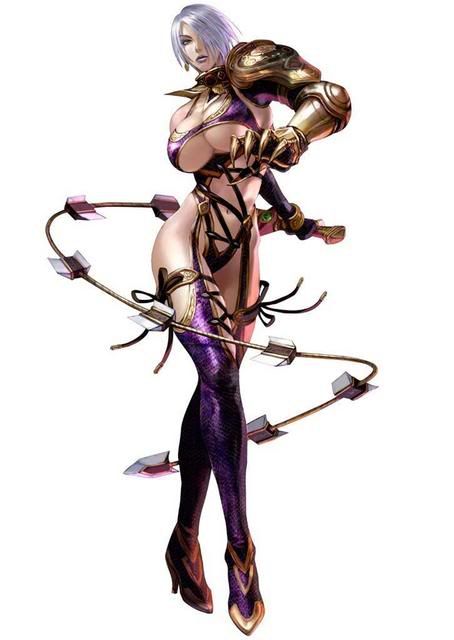
For it’s time, Soul Calibur II was also very pretty. Sure, characters like Ivy were nearly naked, but the stage designs were phenomenal and the lighting was top-notch. I never really give a crap about graphics since games don’t need to look pretty to be fun but, with Soul Calibur II you couldn’t help but notice the intricate stage and character designs rich with color and textual detail.


A lot of people have told me that the original Soul Calibur was the best in the series. I enjoyed Soul Calibur a lot, but for whatever reason, Soul Calibur II captured me. Maybe it was because of the exclusivity of Link or maybe it was because of the one-player mode. Whatever it was though, I could not put down this game. I was compelled to unlock everything and the characters are so different that you were forced to change strategy based on what character you were playing against.

I’ve never played a standard fighter that has been so diverse. Soul Calibur II is the best traditional fighter I have ever played.
------------------------------------------
My Top 52:
#52 --- Star Fox 64 (N64)
#51 --- Kirby's Adventure (NES)
#50 --- Roller Coaster Tycoon (PC)
#49 --- Grand Theft Auto III (PS2)
#48 --- Metroid Prime (GC)
#47 --- Halo 3 (Xbox 360)
#46 --- Bomberman 64 (N64)
#45 --- Guitar Hero II (PS2)
#44 --- Super Street Fighter II Turbo (GEN)
#43 --- Pokemon Puzzle League (N64)
#42 --- Soul Calibur II (GC)

Sunday, September 14, 2008

BC Advanced Strategies: Blew It

I recently learned this dice game from Paul J., the Co-President of PLAY. "Blew It" is a dice/betting game that is simple to play and incredibly addictive. All you need to play this game is a set of six dice. Strategy (or the rules even) isn't that complicated either, so it's easy to pick up and play. There are many different variants of this game but I'll just show you one that Paul J. taught me. Here are the rules as I know them:


A player takes the six dice and rolls them on the table. Depending on what you roll, you will get points. Any dice that are worth points you can choose to save/hold on the side and continue rolling the remaining dice to gain more points. If what you roll doesn't produce any points then you "blew it," meaning your turn is over and you lose the points you you were saving on that turn. You only earn points when you end your turn without blowing it. Whenever you blow it or save points, you pass the dice to the next player. There is no limit to how many players can play.

The goal of the game is to get 10,000 points. You score points by rolling certain dice combinations. Here are all the possible ways to get points:

1. Each 5 is worth 50 points.
2. Each 1 is worth 100 points.
3. If you roll all six dice and get a straight (1,2,3,4,5,6), you receive 1,200 points.
4. If you roll all six dice and get three pair (i.e. 6,6,2,2,3,3) you receive 1,200 points.
5. Six consecutive 1's results in 10,000 points. Consecutive means that you save only one 1 on each turn and on your sixth turn when you are only rolling one dice, you must roll a one to get all 10,000 points.
5a. Six consecutive 5's results in 5,000 points.
6. Any three-of-a-kind is worth the dice number shown times 100. (i.e. three 5's=500 points).
6a. Three ones is worth 1,000 points.
7. A four-of-a-kind is worth the value of three of a kind times 2 (i.e. four 4's= 800 points.)
7a. A five-of-a-kind is worth the value of three of a kind times 4.
7b. A six-of-a-kind (lucky bastard) is worth the value of three of a kind times 8.

NOTE: Four-of-a-kind and higher have special rules attached to them. The remaining dice must have some sort of value in order for the four, five-of-a-kind to count. In order words, the remaining dice must either be a 1 or a 5. If you do not have a one or a five, you must roll the remaining dice to "prove" the four, five-of-a-kind. Failure to roll a one or a five results in one losing everything you have gained on your turn. Alternatively, you can choose to only count the three-of-a-kind and not try to prove the four, five, or six of a kind. Also, since six of a kind has no remaining dice (obviously), then you must roll all six dice to prove your six-of-a-kind, in which case ANY point combination will result in you proving your six-of-a-kind.

All of the above rules (except for 5 and 5a) apply to one roll on your turn. In other words, if you save two 1's and then roll a another one on your third turn, you will NOT have a three-of-a-kind. The three-of-a-kinds and higher must be rolled in one roll. Same goes for three pairs and the straight.

If you manage to get points on all six dice (i.e. 1,1,5,6,6,6,), then you can roll all six dice again and let the points ride. In the example shown in this paragraph, the player currently has 850 points. The player can choose to save the 850 he or she has earned and end their turn, or the player can choose to roll or six dice again and potentially add on top of his or her point total.

Also, you must first earn at least 1,000 points before you can save points under 1,000. In other words, the first time you score must be worth a 1,000 points or more. Anytime after that you can save any point value you want. When one player reaches 10,000 points or more, every other player gets one more chance top the leader's total. One other quirky rule is that if you only rolling two dice, any doubles that you roll can be re-rolled.

The rules sound confusing but they quickly stick with you once you start playing. Refer back to this page while you are playing if you forget how to properly keep score.


Strategy:

Like I said before, there isn't much strategy to this game but choosing when to save your points can be the difference in you winning or losing. Here is some strategy I picked up when I played this game last week:

1. If you finish out all six dice, roll again. The probability of you rolling all non-point dice on all six dice is pretty low. It can happen but, the reward far outweighs the risk. On a full roll, you can earn the special 1,200 point combinations or have a good shot a rolling a three-of-a-kind.

2. Three dice is the cutoff. This is more of a personal choice but I feel the probabilities get a little too dicey (pun!) when rolling less than three dice. With three dice you can get a three-of-a-kind, a one, or a five. With two dice you're relying on ones or fives. You should roll two dice though, when you rolled a four ones or four sixes. 2,000 or 1,200 points respectively is a lot of points not to take a chance on.

3. Get on the scoring board as fast as possible. The game just started and you rolled three 1's. You could roll three dice and go for more points. Don't. Take chances when you are at least on the board. Getting 1,000 points isn't exactly easy, so take what you can to get on the board.

4. In the lead? Save small point totals. Saving little point totals like 400 or 500 points is lame, but if you're in the lead it makes sense to do so. You're not chasing anybody so you should take it slow and steady until you reach 9,500 or somewhere around there. Little point totals can really discourage other players who are trying to go big and catch you. The 1,200 point bonus and the three-of-a-kind on 1's will result in people catching up to you, but if you are in lead, just keep chopping away.

5. In the end-game, stay right behind the leader in points. Whenever someone reaches 10,000 points or more, everyone else gets one more shot to take out the leader. If you're right behind the leader when he hits 10,000, then you won't have to make up to much ground. Also, the leader may take more chances going for a big score to put some distance between himself and other players which gives you more time to do the same or get right under 10,000.

6. Score is close at the end-game? Aim for 9,950. This is especially important if you are the leader in close games. The second-place person will likely try to follow strategy #3. Once at 9,950, all you need is one more good point run, somewhere over 1,200 points. If however, you are leading by a lot at the end-game (1,500 or more), just finish out anywhere above 10,000 and hope no one gets lucky.

There are some more strategy with this game but I think I'll leave you with the six outlined above. Try playing this game sometimes with some friends; you'll really enjoy it. If you find some more strategies post them in a comment. I'd love to hear what you think.

Photos: From now on click on the photo to find it's source.

Friday, September 12, 2008

Travian: a MMORTS time drain

Like Civilization? Want to play the longest Civilization game of your life in the form of a browser-based MMO? Sounds like Travian is for you. Travian is actually a real-time strategy game, not turn based; however it reminds me much more of Civilization than it does of Warcraft/Age of Empires.


This is the buildings screen (be sure to note my wittily named village), and there are many of your typical buildings, such as a barracks for building troops, an academy for researching new troops/technologies, a blacksmith for upgrading weapons, and stables for cavalry.


Another familiar element is the hero. This isn't as big of a deal as it in games such as Warcraft 3; he gets to level up, and get stronger, but he doesn't get any cool special powers unfortunately.


To build things, you of course need resources. In Travian, there are two main ways to get resources. Firstly, you are surrounded by fields. There are wood fields, wheat fields, iron fields, and clay fields; fairly standard. As you upgrade your fields, you produce more of that resource per hour. The second way is by raiding other villages and stealing their resources.


There's no gameplay involved in the actual attack, you just send however many troops to your destination, and based on all of the attackers/defenders stats, the result of the battle will be determined. If you are 'raiding', each side will take one swipe at the other, then the attackers will steal as much resources as they can hold, and march back to their home village with their booty.

If you are just doing a normal attack, the battle will continue until one side has no troops left. If the attacker is successful, the remaining troops will take their bounty and return home. In either case, a defender can protect his resources by building crannies, which keep a certain amount of resources safe.


As with every strategy game, there is more than one race, group, etc. to choose from. In Travian, your three options are: Teutons, the aggressive, offensive folk, the Gaul, a tame, defensive tribe, and the Romans, which are a middle ground between the two. Another aspect of the game is alliances, but since I'm opting to stay solo for now, I don't have much to say about that.

I should clarify the phrases "time drain" and "longest Civilization game of your life". You only play it for a few minutes at a time, to set up building orders, send off troops, etc. I play for about 15-20 minutes a day, a bit longer if I'm doing a lot of attacks.

It's fairly addicting, especially if you know people in real-life who play, and can geekily discuss the game with. If you'd like to join me, I play as a Teuton on server US2, with my home in the NW quadrant. You can sign up here (this is a referral link), send me (randomguy132) an in-game message if you do, and I'll help get you started and answer all your questions and whatnot.

Godspeed.

Flashy Friday: Four Second Frenzy

Four Second Frenzy is a silly little flash game was very popular when it came out on addicitinggames.com. Mimicking the fast-paced mini-game style gameplay of the WarioWare series, four second frenzy has you play mini-games that last only 4 seconds long each.

All of the games are simple to play and require only a few keystokes/mouse clicks to finish. The game doesn't give you instructions for all of the games, just a general goal like "finish," "avoid," or "drink." Some mini-games include platformers, shooting, mashing a button real fast, etc. You'll likely lose on some of the games but all of the controls are fairly easy.

There isn't much down time between games as well, so the entire game can get pretty chaotic. The fast-pacing of it however, is what will keep you hooked. There's also a boss in the final section that will give you more mini-games to play if you don't beat him in time.

Click here if you want to play Four Second Frenzy. Watch out though, it is addictive.

Photo: [1]

UPDATE: Since it is Friday I also post at WillandBeyond. Click here to see my post.

Wednesday, September 10, 2008

Top 52- Pokemon Puzzle League (#43)

This week's Top 52 segment features the most intense puzzle game I have ever played: Pokemon Puzzle League. I think the reason my fingers move so fast is because of this game.
---------


Title: Pokemon Puzzle League
Console: Nintendo 64
Release Date: 09/25/00 (US)
Genre: Puzzle
My Ranking: #43

Despite the cutesy Pokemon overtones, this game was made with the hardcore players in mind. Pokemon Puzzle League is pretty much a direct rip of Panel de Pon, which is more widely known in America as Tetris Attack. The goal of the game is to match like pieces together, make big chains and destroy your blocks.

Tetris attack can be enjoyed singularly, where in marathon mode you just try stay alive and don’t let the blocks reach the top of the screen. By matching blocks and subsequently making blocks fall to make a row of three or more, you can make consecutive chains and stop the blocks from appearing on the screen for a brief time. Since there is a brief 1 to 2 second delay when blocks are matching and being destroyed you can move your cursor and place more blocks in place for a chain. Pokemon Puzzle League then becomes a very active puzzle game, where each move leads to another.

The game becomes more dynamic through when playing against a friend or computer bot. Each chain you make sends “garbage blocks” to the opposing player that can only be broken if three matched pieces touch the garbage block. Once broken, the garbage block changes into blocks you can use to make more combos and chains. The bigger the chain you make, the bigger garbage block you send to your opponent.


Garbage blocks are both the key to killing your opponent and creating big chains. With big garbage blocks, you can only destroy them one layer at a time and as long as you keep breaking the block within one chain, your chain can continue on, seemingly forever, which in turn, sends bigger blocks to your opponent. The game then becomes cyclic, which each player trying to out do each other’s chains, while breaking garbage blocks to stay alive.

Tetris attack was always played with a 2D grid which was already good enough. Pokemon Puzzle League added a 3D mode where the board would turn around so that the blocks were placed on the circumference of a circle. This mode was simply broken; so broken in fact that a 3D mode game could go on for forever. With friends at PLAY: The Games Club, we have maxed out the game timer at 99 minutes.

The reason the game goes on forever is because the garbage blocks take so long to fall from when you break them in 3D mode, giving you plenty of time to create a huge chain off the block and then break the next layer off the garbage block. When your chain eventually stops, you send such a huge block to your opponent which only helps them make a bigger block, and so on.


The game also has too many pixels occurring at once in 3D mode when both of you are breaking garbage blocks, which gives you even more time to think about how to create more chains. It’s beautifully broken so that 3D mode matches with good opponents become marathons.

The one-player mode was also ruthless. I’ve only beaten Super Hard mode twice. The one-player mode only works in 2D mode and the AI in Super Hard is just ridiculous. Their cursor moves faster than the human hand and they think so quick that they can use almost all their blocks for the biggest chain possible with what they have. Seriously, check out the video below to see how fast the computer moves on Super Hard (this isn’t even the hardest stage).


To make things even more insane, you have to beat the two final stages back-to-back. The penultimate stage is a rematch with Gary and I’ll easily lose against him 20 times even though I’m god-like in this game. Then you need to face against Mewtwo, who is even faster than Gary. If you lose to him (and you will), you need to beat Gary again. It’s mega hardcore and thankfully the game gives you an infinite amount of continues to compensate. When I finally beat Mewtwo, I jumped and screamed in excitement. The fast-action puzzle just gives you so much adrenaline.

I absolutely adored this game. Pokemon Puzzle League remains the most challenging and rewarding puzzle game I have ever played. It seems as though the developers made the AI with the intention of them not getting beaten. Honestly, I appreciate that. Making chains was very intuitive, required quick thinking and the game’s difficulty pushes your brain to think faster than what you would think is possible.

Seriously, if you want to improve hand-eye coordination and reaction time, play this game. It’s available on the Wii Virtual Console right now if you own a Wii.
------------------------------------------
My Top 52:
#52 --- Star Fox 64 (N64)
#51 --- Kirby's Adventure (NES)
#50 --- Roller Coaster Tycoon (PC)
#49 --- Grand Theft Auto III (PS2)
#48 --- Metroid Prime (GC)
#47 --- Halo 3 (Xbox 360)
#46 --- Bomberman 64 (N64)
#45 --- Guitar Hero II (PS2)
#44 --- Super Street Fighter II Turbo (GEN)
#43 --- Pokemon Puzzle League (N64)
#42 --- Revealed on 09/16

Photo: [1], [2]

Sunday, September 7, 2008

Eliza, Computer Therapist

Remember that post I made about The Guild? That post was actually a requirement for my Digital New Media class in NYU. I will be making more posts for that class on my blog and since my focus is on gaming (both in the class and for this blog), most of the posts relating to Digital New Media will at least touch upon gaming.

I just finished reading what I was required to read in the New Media Reader and I found something found interesting early on in the reading. Programmer Joseph Weisenbaum made a computer program that would act as a computer therapist named Eliza. Eliza is purely a text-orientated conversation but, for a program that was made in 1960, the responses are pretty involved.


I found Eliza online and decided I would try having a converstaion with her. Here's a brief part of how our conversation went down:

> Say, do you have any psychological problems?
* yeah. i'm angry at you
> Do you believe it is normal to be angry at me?
* no, because you're a computer program
> Why no?
* because you're not a real person!
> Perhaps you would like to be not a real person?
* woah, now that's deep, I didn't know you were a philosopher too.

Eliza actually doesn't have any AI. She works off substituted strings and giving set responses to key words. Oddly enough though, in the 60's, some people mistook her for a real person. Chat windows like we know them today did not exist in the 60's, so the possibility of a computer talking to you was still far-fetched.

If you try talking to Eliza, it becomes clear within the first few minutes of dialogue that she is not real. We only know this though because most of us have experienced bots on AIM. WillandBeyond blogged about one of them recently. Our brains have become "wired" to catch formulaic speaking patterns online, so much so that almost no one in our generation would believe that Eliza is real. This doesn't mean we're necessarily a "smarter" generation; our brains just function and think differently because of the digital world.

Eliza is a little bit of a game in a sense that she creates an environment in which humans can interact with the software. The program isn't simply doing a service for you, like a calculator; it's reacting to human input in order to create engagement. Other text games like Colossal Cave Adventure may have been more fun, but Eliza too is a game.

Click here if you want to talk to the therapist Eliza as well. She's nice, don't worry.

Photo: [1]

Saturday, September 6, 2008

VG Advanced Strategies: Super Smash Bros. Melee

Super Smash Bros. Melee redefined what a fighter could be. SSBM had a ton of physics "errors" that allowed for extremely competitive and hardcore play. SSBM players are familiar with terms like short hopping, wavedashing, SHFFLing. Almost all of the advanced techniques were eliminated in the Wii version of Super Smash Bros. (Brawl), which really destroyed the competitive community.


I pretty good at SSBM, but I never mastered all of the advanced techniques that reduce your delay between attacks and confuse your opponent. Normally with the Advanced Strategies segments I share with you my advice and thoughts. This week is going to be a little bit different because I found a set of YouTube videos (created by someone with the alias of Wak) that break down the advanced techniques extremely well. Even if you don't play the game, you might enjoy the videos, as they will give you an inside look as to why SSBM garnered such a following.

If you still play SSBM, watch these videos to really improve your game. It will take a lot of practice, but you'll be pleased with how fast your favorite character can move. Personally, I like Melee more than Brawl mostly because of the smoother gameplay. Both games have their flaws, but the mechanics are much more sophisticated in Melee, so much so that beginners can pick it up quickly while the game itself is impossible to master.

Here's the first one, which goes through the very basics of the game and then goes into short hopping, fast falling, SHFFLing, wavedashing and wavelanding. Don't worry about the terms if you don't know them, he explains them very well.


Part two covers shield techniques, recovery techniques, and edge techniques. Most of these are pretty simple but can save you a life if used correctly.


Part three is very long but has a wealth of information. Dash Techniques, Jump Canceling, Directional Influence, and Meteor Canceling are just some of the strategies told here.


Just because Brawl is out doesn't mean you have to stop playing Melee. Try out some of these moves if you have the game. You'll be amazed how much more dynamic SSBM can be.

Photo: [1]

Friday, September 5, 2008

Creative Game Design

Game creation over the course of time can be a result from one of two causes: evolution or creationism. (But we're not getting into a religion versus science debate.) (Because science/evolution win of course.)
Evolution: Taking an existing game and improving upon it, in terms of graphics and/or gameplay. Examples: Mario and every other franchise.
Creationism: Every non-franchise (or the first in a franchise), non-copycat game ever made.

Here are some 'creationist' games that I've come across over time, and that I'd like to play. Despite the Mario example above, these will be strictly non-video games.

Jumbo Monopoly: Starting off with baby steps, this isn't revolutionary game design, as we're just taking an existing game and making it jumbo size, but you can't argue that this changes things completely. I have always wanted to play a jumbo sized game of Monopoly, and that desire was always fueled whenever I went to the Toys R Us in Times Square and saw that mega-sized Monopoly board on the ceiling. These kids from Columbia have apparently lived out my dream. I want to play so bad...


Riskopoly: Another step towards creationism gives us the idea of combining two games and creating one. As the name implies, Riskopoly combines two excellent games, Monopoly (normal-sized) and Risk. I have read through the rules a few times, and it seems like a great system. To very briefly summarize; you play Monopoly, and whenever you pass Go, you get to take a Risk turn. You're able to buy armies with Monopoly money at the cost of $50/army. There are lots of tweaks to the rules, but that's it in brief.

Capture the Flag with Stuff: Next is taking an existing game and just heavily modifying it. Ever since seeing this, I have wanted to play Capture the Flag with Stuff. From what I can tell, it was developed at Carnegie Mellon, and there are some pictures here. (They even had a PowerPoint presentation beforehand going over the rules!) Basically take Capture the Flag, and add in magical glyphs, wands, potions, and belts. What? Exactly. If anyone get this together, it's PLAY, so get on this ASAP.


You Have to Lock the Entry: The final evolution towards creationism (sounds strange...) is creating a new game from scratch. I came across Scott Jon Siegel when I was reading his review for Carcassonne. (Great game.) You Have to Lock the Entry is a card game he made up based on the chaotic world of Wikipedia. Very strange idea, but it looks fun. It looks like a fairly quick game where you have to move your hands quick and play fast. (Similar to speed/spit/egyptian rat screw, but not in gameplay.) Scott has a column on The Escapist (home of Zero Punctuation) called Game Design Friday, which is published on Fridays, somewhat sporadically.

Hopefully these examples inspire you to create your own games, or in the very least, play one of the games described above. Oh, and in case you didn't catch it, I'm fairly certain the title of the last game is an homage to You Have to Burn the Rope. Make sure you have your speakers on when you manage to beat it.

Photo: Flickr

Godspeed.

Flashy Friday: Tactical Assassin

This week's Flashy Friday game comes courtesy of my roommate Garrett. I asked him what one of his favorite Flash games was and after some thought he responded with Tactical Assassin. I have played this one before and admittedly, I totally forgot about it. It's a really well polished game that has a good difficulty curve throughout.


Tactical Assassin is a sniping game. You recieve missions at the beginning of each level. Make sure you read them or else you'll be confused. The sniping scope moves along the screen in conjunction with the movement of your mouse. Since you're looking through a scope though, you'll only see a fraction of the screen when looking around. Strategy then, is often hampered by your tunnel vision, which adds to the gameplay.

The music is cool smooth and catchy. The graphics are stick figures but it feels right in the setting. With the music and mission-style gameplay, I felt as though this game was influenced by Goldeneye 64.

Tactical Assassin is an excellent example of how creators can use Flash to create dynamic shooting games. Check out Tactical Assassin here.

Photo: [1]

Thursday, September 4, 2008

Watch The Guild

I was introduced to a new Webseries today called The Guild. This show chronicles the lives of a group of World of Warcraft players in the real world. The episodes are pleasantly short and the writing is hysterical. Sometimes there are one or two bad poop jokes, but other than that, if you know about the stereotype of MMORPG players, then you'll find this show amazing.

Oddly enough, a professor showed us this show during class. She presented the episodes as an example of independent authors successfully using new media for economic gain. The Guild has had a ton of people donate and they even had a screening at the super-successful PAX. I posted the first episode below if you don't want to go through the website to see the whole season.


Seriously, some of my classes are just so AWESOME.

PLAY: An Outlet for Social Gamers

Today was Clubfest at NYU, meaning our E-board got a chance to show off PLAY: The Games Club to all the incoming freshmen. It was a big success yet again, as we had over 250 people sign up for our listserv. We also handed out over 300 fliers to students as they passed by. Hopefully, this means that people we come to our first general meeting on September 9th.

I've been President for this club for about two years now and I'm starting to see this club get really big. About five different clubs want to do co-sponsorships with us this year and we might even be doing a fund-raiser event with some of the community-service orientated groups. I'm all about community service; I hope this plan doesn't fall through.

Our Public Relations officer is a lovely girl named Ariel Hou. She made this awesome flier for us (pictured below). I simply love her creative design; she used different games to spell out our games club. Can you tell what each letter references?


PLAY is just a wonderful club to run. We just play video games, board/card games and we are pretty chill all the way around. I've met so many people through this club and I feel as though I've made lifelong friends just playing games with cool people. It's nice though, that we aren't cliquey; we always accept new members and they become integrated with our group.

I seriously don't get it when some people say that we are a dorky or nerdy club. Sure, some gamers are dorky and socially awkward, but what club/institution/party doesn't have that? Games are a social activity that really bring people together. While people play games, we talk about games, our lives and school. Video games and board games brew a friendly, competitive atmosphere that not only entertain us, but bring us together. Gaming is a rare medium that can be incredibly fun and social and fill up silent gaps.

Tuesday, September 2, 2008

Top 52: Super Street Fighter II (#44)

This week's Top 52 finally touches upon one of the most underappreciated consoles of all time, the Sega Genesis. Super Street Fighter II has been one of the few fighters to blow my video game mind away. I'll show you why in this retro-review.
-----------------------


Title: Super Street Fighter II
Console: Sega Genesis
Release Date: March 1994 (US)
Genre: Fighting
My Ranking: #44

This game isn’t Street Fighter II Turbo. It isn’t Street Fighter II: Champion Edition, Street Fighter II: Special Championship Edition or just Super Street Fighter 2. This game is Super Street Fighter II for the Sega Genesis. Why they made so many iterations of the same game is beyond me. Regardless, this game rocks and is best 2D fighter I have ever played.

I’m not a big fan of the standard fighting games. I find that in most of them you can just mash buttons and be successful. Knowing combos and blocking can be helpful, but for most fighters you can get away with not understanding the game’s mechanics. With Super Street Fighter II you can hold your ground with button mashing, but the better player will usually win.

Most people play as Ryu or Ken (they are awesome characters) but most of the characters are pretty balanced. I’ve seen people own with M. Bison, Sagat, Blanka, Chun Li, E. Honda and even Guile. Characters like Cammy (she's hot) and Balrog (he's not) are completely useless in big competitions but there is enough variety to keep the game interesting.

Street Fighter has set the standard for fighting games. Quarter-Circle punch is forever etched into my mind as a projectile attack. Even current-gen fighters like Soul Caliber still have some projectile moves that use a quarter-circle punch to activate. Seriously, if you’re a gamer, do you not know what a Hadouken is?


Super Street Fighter II was absolutely perfect on the Sega Genesis 6-button controller. You could put the low, medium and high punches for the X, Y, and Z buttons and the low, medium and high kicks for the A, B and C buttons. The button layout was organized and really was easy to use. Using the shoulder buttons on the SNES just didn’t work for Street Fighter.

By using a barrage of punches, kicks and special attacks, a player could wipe out an opponent pretty fast. The health bar was at the perfect level so that you could survive one really well-placed combo but, if your opponent caught you again you wouldn’t survive another combo. You had to strike quick and be sure not to miss because a good opponent would take advantage of your mistake.

I remember playing this game with my brother when I was young, and I remember him kicking my ass in this game. When I beat him with Blanka one time, I was so excited. Nothing sounded so satisfying than to hear Ryu gasp in death from an electrical shock. Yeah, I was eight at the time, but it still rocked.

I soon discovered the complete and wonderful balance of Ryu and Ken and began to use them more often. I never became a beast at this game but I know almost everyone’s moves in that game. I still fall back to this game every now and then. The controls are so easy to pick up and the fighting is so precise and intense when you’re playing against a tough opponent. It was also great to be able to increase the speed of the game at the title screen, requiring more focus on the player’s parts.

Super Street Fighter II still remains one of the more popular fighters today because of its competitive, simple gameplay. Moves and combos aren’t that hard to figure out. Just pick a character, find their brief move set online and try combining some moves in the one-player mode for about fifteen minutes. Even if you never played a fighter before, you’ll get the hang of it.

Accessible yet competitive; there’s a reason why people are going crazy about the upcoming Street Fighter IV.
Awesome Easter Egg! Watch it!

UPDATE: The cartridge I have is Super Street Fighter II, no turbo. Super Street Fight II TURBO never made it to the Genesis. My bad. Thanks to Jeffrey for that catch. If Capcom would only name one game one NAME, this wouldn't be an issue. Lolz.
------------------------------------------
My Top 52:
#52 --- Star Fox 64 (N64)
#51 --- Kirby's Adventure (NES)
#50 --- Roller Coaster Tycoon (PC)
#49 --- Grand Theft Auto III (PS2)
#48 --- Metroid Prime (GC)
#47 --- Halo 3 (Xbox 360)
#46 --- Bomberman 64 (N64)
#45 --- Guitar Hero II (PS2)
#44 --- Super Street Fighter II (GEN)

Photos: [1], [2]

Monday, September 1, 2008

Know Thy NES

I found an interesting video on YouTube today. Someone has compiled 100 NES games in 10 minutes. I challenged myself to see how many I titles I knew just from looking at the brief seconds of gameplay the video showed. I was able to correctly recall 58 of them, which I think is pretty good. Here's the video:


The correct answers are at YouTube, after you click on the "More Info" thingy which is right next to the date of which the video was added. If you have ten minutes to spare, see how many NES games you can identify. Then look at this rating system I just made up to see how awesome I think you are.

0-9: Man, you probably have never played NES games. Stop reading right now and play some of them if you fall in this category.

10-19: You probably know most of the famous ones. That is good. But play more! Most NES games are classics and deserve more attention.

20-29: Maybe you couldn't recall some of the one's you saw. Regardless, that's a good amount of NES games to know right off the bat.

30-39: Wow, you clearly are a gamer who knows most of the NES classics. Awesome.

40-49: You must have loved your NES as a child and have a decent memory. Way to go.

50-59: Now we are in the hardcore range. Some of those games are really obscure.

60-69: I'm impressed. You know more NES games than I do. Maybe you should write about classic games on this blog!

70-79: Now we are getting in the ridiculous range. You, my friend, are an NES fiend.

80-89: Really!? Are you serious? You have some crazy video game knowledge.

90-99: I am not worthy. Teach me your gaming knowledge, oh great one.

100: Cheater!

Even if you got in the 0 to 10 range I still think you're awesome, no worries. This is mostly to ensure that my girlfriend doesn't think that she is not awesome, as she will most likely fall in the 0 to 10 range.