Sunday, December 14, 2008

Reflections on a Gaming Semester

I'm a Video Game Production major at NYU. I'm sure that confuses some people, since NYU just announced they will have video game majors starting NEXT year. At my school in Gallatin we get to create our own concentrations, and mine is in Video Game Production. I guess that means I'm slightly ahead of the curve? What's nice though is that NYU is starting a masters program in gaming in Fall 2010, which is the semester right after I graduate. If I pull the right strings I might have a way into that, unless, of course, I find an good-paying job out of undergrad. Eh, whatevs.


Being that I'm a junior, my academic career is flying full throttle. I took four classes this semester. Digital New Media, Game Production, Culture as Communication and Hackers: Culture and Politics. All four of these classes blended together extremely well, and I felt that each discussion in these classes were extensions of a previous conversation I had in different class but with a different spin on it.

The first example of this happening was when I talked about Jorge Luis Borges and the Garden of Forking Paths. I had to read that short story for both my Digital New Media class and my Game Production class. In game production we looked specifically at the labyrinth the main character walks through in order to find the person he needed to kill. We took that winding labyrinth idea and made our own 3D models of of a labyrinth. Hence the Lego Labyrinth post I made earlier.


In Digital New Media, we took Borges' story and analyzed it terms of hypertext. By killing a prominent person who was also the name of a city, Borges showed a hidden meaning embedded with his the actions of his character. The idea of hypertext also blended into other topics in Digital New Media, the obvious one being how we use hyperlinks to continue a line of thought or a narrative.

I thought it was neat that my classes complimented each other in little bits early in the semester. By the end of the semester though, everything I was doing was becoming part of one big wheel, and content was getting recycled with different lenses in different classes. I remember watching McLuhan's Wake in Digital New Media while reading McLuhan's Understanding Media in my Culture as Communication class. McLuhan's Wake was a film produced by Marshall McLuhan's son that took McLuhan's ideas of the "medium is the message" and "hot and cold media," along with many others and used them in a film format.

For those who don't know, McLuhan is one of the pioneers of new media studies. I recently wrote a paper on how McLuhan would probably look at the interpersonal relationships between people while they play video games. You can read that paper through this link.


I also read Henry Jenkins' Convergence Culture and I took one his ideas--Trans-Media Storytelling--and decided to do a final project for my Digital New Media class with Jenkins in mind. The concept behind Trans-Media Storytelling is that current media have the ability to take one storyline and extend it over different mediums. For example, The Matrix is a three part movie series. However, the story is also extended in the Animatrix anime series and in the Matrix Online game.

For my take on his theory I made a Little Big Planet level that focused more on a narrative, while still having quite a bit of gameplay. I recorded the level with voice acting and made it into a video on YouTube. The video is also posted on this site, right before this post. The Little Big Planet level is just one step in a trans-media storytelling format. By making a video, I move the game into another medium, and since I made the level copyable, someone could take my design, improve upon it, or even continue the story.


The Little Big Planet level isn't the only project I was working on this semester as well. For my Game Production class, I had to create a game using programs such as Autodesk Maya and Virtools, which both focus on making 3D environments. After much deliberation and tons of time spent learning the software, I was able to create (fairly) working demo and a level design document that lays out the goals of the game, the inspiration and a timeline of various models. I have a screenshot of what the game looks like below (called Clockwork), and you may notice that the level design was inspired by the Lego Labyrinth.


I do plan on finishing the game, at least just the first level. I plan on having it out before the end of December and it will posted on this site first. Shawn was awesome enough to record some music for the game, and he linked to you it in his most recent, and first, post on this blog.

The story for Clockwork is pretty straight forward. You're a worker inside of a gigantic clock constantly being watched over by what looks to be drones. Your character decides that he can't take it anymore and decides to leave his post working on the gears. In order to escape from the clock, you need to solve a series of puzzles to unlock the path to the exit. And being that you're in a place filled with gears, many of the walls and floors turn, which add to the puzzle frenzy.

This whole story is explained without words, mostly because gamers playing a puzzle-action game probably don't want to read story. Instead, the above passage is explained just through animation. A video game narrative doesn't need words to be effective, at least, in my opinion. Why is this the case? Sherry Turkle, a writer I mentioned in a previous post gives her view on the subject. Turkle suggests that gamers care less about narrative in games because the interactivity of a game already allows them to create their own story, even if they are trapped in a highly rule-based world.Even though Turkle made those observations in the 1980's, some of her perceptions still hold true today.

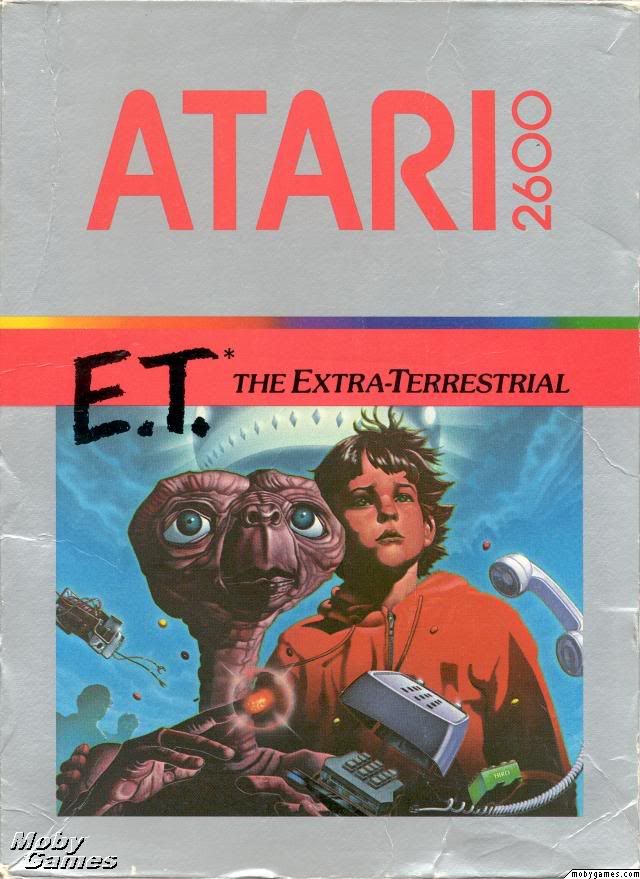
I actually learned a lot about video game history this semester, though that knowledge surprisingly came from my Hackers: Culture and Politics course. I didn't know that the makers of the Atari 2600 were a bunch of hackers, and I also found out where the 2600 came from. I wrote a whole history about the 2600 on Will and Beyond, so check it out if you want to find out more.


I think the most important thing I learned this semester relating to video game production is that in order to create something successful, you have to look at it from an interdisciplinary point of view. Gameplay isn't the most important thing, as I always have said in the past. The look and feel of a game, the story, the music, the entire development team; they all need to work together.

Games aren't all about the content either. McLuhan taught me to look at the interactions outside of the content and Jenkins showed me that video games aren't a closed medium; they seep into almost all of the other media that we have. And while games should be focused on making gamers happy, games are so integrated into our culture that they affect the growth of business, music, film, and ourselves. To ignore the appeal of games to any person would be taking a very narrow mindset.

Next semester will be interesting as well. I'm taking a class on game art, another in advanced photoshop, a class about evil characters in stories, a class on reading and theorizing film and my internship with Illclan, an animation company that produces Machinima.

Saturday, December 13, 2008

Little Big Planet- The Owl Collector

One of my many final projects was to create a Little Big Planet level/film. I learned a lot about how different mediums combine together in my various classes at NYU this year. Whether is was McLuhan's theories on hot and cold media, or Jenkins' idea of convergence culture, each of them suggested a melding of mediums. So, I decided to take their ideas into practice and create a little big planet level with some basic story elements and voice acting. The result is shown below.


Alright, so it's not THAT funny, but I thought it was pretty cute for what Little Big Planet is. Making the level took about 4-5 days of work; most of it being spent on testing and re-testing gameplay elements (the falling blocks part was a bitch).

The gameplay and script was created by me and the characters used are characters Media Molecule had in the story mode. The fantastic voice-acting was all performed by my roommate, Garrett.

Yeah, I know. The quality sucks. Eventually I may have a (working) adapter that allows me to plug my PS3 into my computer. If and when that happens I'll recorded this video with better quality. Even with this quality though, my professor and classmates seemed to love it when I presented it. I think I also blew their minds when I showed how the gameplay mechanics work.

I'm still impressed at the amount of tools Little Big Planet has for the level editor. I was even able to affect the camera angle at the end so you could see the catapult activating. Crazy stuff. If you have LBP and you would like to play this level, search for "The Owl Collector" in LBP. And if you like it, please heart it! I need 5 hearts in order to get a trophy.

Expect a Little Big Planet review in the upcoming week.

Video Gaming with McLuhan

I wrote this paper for my Culture as Communication class. The essay looks at McLuhan's theories on media, and sees how well his theories would apply to video games. Since McLuhan always pushed the "medium is the message" idea, I analyze the interactions between people as they play video games, while under a McLuhan lens. Being that the paper is academic, read only if you're looking for something fairly intelligent sounding.
--------------

Video Gaming with McLuhan

Marshall McLuhan introduced a revolutionary idea to media studies. Instead of examining the new content in the media, McLuhan looked at the interpersonal relationships forming because of the new medium. He was more concerned with the human interaction than with the subject itself. I only wish that McLuhan would have been alive to study and remark on the environments that current video games create. There have been hundreds of studies that look at the effects of violent video games, but few have looked at the interpersonal relationships that form around this new medium.

A common misconception of video gamers is that they become glued to the action on the screen and do not interact with the players around them. Yet, whenever I host a video game club event in NYU, the room is loud not because of the television, but because of the people interacting (more like yelling) with one another. As play occurs, the people become more in tune with their characters or avatars and as their characters win or lose, they mimic the feeling of joy or despair in the real world.


Mocking, cheering, gloating, cursing and anger are just some of the emotions expressed in the multiplayer experience that exists out of the gaming world. For “play,” whether in life or in a wheel, implies interplay. There must be give and take, or dialogue, as between two or more persons or groups” (McLuhan, 240-241). The discussions outside of the game are particularly odd because a game allows the parties involved to be cruder. Calling someone a loser or a n00b is mean but, a gamer has no choice but to accept the insult, and retort with an even better insult. In addition, the better your rhetoric is, the more you will impress your opponent and you will bond closer together both inside and outside the gaming environment.

Why does this happen? Multiplayer gaming is a forced competitive environment and since you are battling in a virtual world, it only seems natural to extrapolate the virtual competition into the real world, and have a competition in rhetoric. And when you eventually win a battle—especially in something like a fighting game where there is a clear cut winner—the jubilation of the character animation and the player may often times be one of the same. “Games, like institutions, are extensions of social man” (McLuhan, 235). Though we may not be battling with swords in the real world unlike our virtual counterparts, we find other ways to compete.


The need for competition in both the virtual and real world may be brought further to light by McLuhan’s theories about hot and cold media. Simply put, hot media is any medium that is high in data but low in participation, while cold media is low in the amount of information but high in participation (McLuhan, 23). Video games seem to break from this mold as they are both high in participation and in data. The user playing a video game is being inundated with visuals and sound while inputting commands on a controller and potentially conversing with his or her neighbor. Participation, in this case is both mental and physical.

The visual and sound power of a movie, on the other hand, is such an overload of data that the watcher is forced to be quiet and process all that is happening within the screen, making it clearly a hot medium. Video games have a similar level of focus since each player looks closely at how the character is interacting with the environment when he or she inputs commands. However, since the inputting of commands forces us to participate in order to enjoy the medium, we naturally participate in the real world as well.

Another reason why we might be more prone to talking in real life while playing video games is that we have a closer tie with the character than that of movie characters. We control the movements and actions of the avatar but the technology is not advanced enough yet that we can control their speech and make it our own. It is possible that since we control the character in some elements, we feel the urge to speak so that we can further complete our connection to the avatar and make the gaming experience a closer match for the extensions of ourselves.


Video games force the user to multitask since there is interaction with a visual object. Since we have the senses of sight and touch covered, the hot media environment we live in may force us to connect with the gaming experience orally as well. Instead of cutting our minds off from an oral interaction, we may feel compelled to discuss while gaming so that we do not overload one of our stimuli. This idea slightly differs from McLuhan who suggests that our bodies self-amputate in hot media situations. “The function of the body, as a group of sustaining and protective organs for the central nervous system, is to act as buffers against sudden variations of stimulus in the physical and social environment” (McLuhan, 43).

It’s hard to argue that we, living in New York City, do not live a hot media society. The internet is loaded with information that we can access at any time now, thanks to the availability of cell phones and laptops. However, instead of blocking ourselves off from the stimulus, we engage with it. The want to know information is very much a gaming quality since it is akin to exploration. The fact that we can handle all the information and play with it might show that we are attempting to cool down our environment in order to make use of all of our senses.


With video games the environment seems to protect its users from self-amputation. You are aware that the player sitting next to you is engaged in the same competition experiencing similar emotions to you while participating in the content. The urge to share your feelings is strong, just as it is when watching a movie with a friend. However, the difference is that since you are changing the content, you feel more ownership to the experience and have no qualms discussing the experience mid-gameplay.

Gamers are a social bunch when partaking in a multiplayer experience. The interactions may be a product of the “warm” medium that it is, since video games are filled with data and participation. Regardless, McLuhan may have made some changes to his theories based on the relationships that form with video gaming. Hot and cold media might have to be re-evaluated and the self-amputation concept might have to be entirely remodeled since video gamers seem to counteract that belief. Since McLuhan never witnessed digital play on something of this magnitude, I am sure our society would influence the development of his theories.
-----------

The book referenced in this essay is McLuhan's Understanding Media.

Feel free to debate my ideas expressed in this paper. I'm sure there are some holes in my argument that people can address.

Friday, December 12, 2008

Dwarves in Spaaaaaaaaaaace!!!

There’s a slight problem that comes up whenever you decide to do a review of a gaming system or a setting therein. When you read a book, you might end up taking something from it that another reader might not. However for the most part what you take from it is what others have taken from it as well. There’s some variability from reader to reader, due to whatever each brings to their interpretation of the book, but that’s really it.

Now the problem with reviewing a RPG system or a setting for a game is that it’s entirely dependent on your experiences playing that system or setting. The material is presented not only in the way that the author intended but filtered through not only the game master’s vision of the setting but through your own. As a result one person’s experience playing in a game will be completely different from another’s. I was introduced to the RPG Vampire: The Masquerade by a group that was very, very into the role-playing aspect of the game. This meant that a player would spend 30 minutes in game (in character) explaining to another player what’s been going on and what the story is up to now because his character hadn’t been there. Now this would go on despite the fact that the other player had, despite his character’s absence, been in the fucking room the whole time and already knew what was going on!! As a result the 2 of them could have just said “ok, when his character gets here, my character tells him everything that happened while he was gone.” I’d never fallen asleep during a RPG before then. So for me Vampire will always be a very role-play heavy game system.

Just something to keep in mind for the time being.

I would like to introduce you to the SpellJammer setting. What is SpellJammer you ask? Well, back in the late 80’s/early 90’s, during Lorraine Williams’ (She who must not be named, Bitch Queen, “That bitch”, etc…) rule over TSR (the guys who made D&D), the main goal she set for the company was to churn out product in an effort to make a profit without worrying about possible inconsistencies or conflicts within the rules themselves. This is what happens when you hand your gaming company over to a woman who says outright that she detests gaming and that gamers are, as a group, beneath her. Now this was both good and bad for gaming in general and D&D in particular because on the one hand, they were churning out a lot of crap (see the Ravenloft setting). But at the same time, this gave their writers a certain amount of freedom to be creative. One example of this is the SpellJammer setting.

Now let me start by saying this setting is broken. Oh god is it broken. You get the feeling that someone at TSR got a memo one day saying “Sci-Fi RPGs are selling right now. Make one. We print next quarter.” In short, SpellJammer is D&D in space, and there’s just something deliciously twisted about that.


The setting is heavily based on old romanticized novels about space travel from back before we actually knew anything about astronomy. Space is fairly warm just like it is on Earth and air pockets stick to objects out there. Why? Well, if it sticks to planets it should stick to anything right? And if something planet sized can hold onto enough air to last us for all of human history, then something as small as a boat should be able to hold onto enough air to last a couple of weeks right? I won’t even go into what they do to gravity, but I’ve seen physics majors whimper while trying to understand it. In game terms, it works out like this. There’s this race of blue giants called the Arcane and they are the biggest group of unscrupulous merchants in existence. So they go around selling off these magical artifacts that convert magical energy into motive force. You bolt one of these suckers onto the deck of a boat and toss a mage in the seat, and he can make that mother fly. And once you get outside of the gravity well created by a planet it can go really fast (from Earth to Mars in about a day). Better yet, if you ever saw the Disney movie “Treasure Planet” it’s like that except you replace all the technology with magic, and swap the comical sidekick for a group of brain-eating slavers.

So what you get is a crazy fucking setting. A mix of pirates and colonial European themes. Small colonies farm out a living on drifting asteroids. Great and mighty empires of evil creatures. Space pirates, merchants, militant hippos, and the great elvish armada. Basically elves, being the magically inclined, ancients that they are have been traveling for quite a while and are little more than a parody of the British Empire, right down to the snootiness and belief that they are justified in anything they do. Oh, and gnomes…oh ye gods the gnomes. Take the craziest, most out there concepts from every D&D setting and mix them together. Now you’d think that was the broken part, but it isn’t. Somehow all of these influences blended together into a fantastic setting. You can be ruthless pirates, a scourge upon the trade between the spheres; elvish agents trying to stop the next great inhuman war; explorers mapping out new and undiscovered worlds; or any other sci-fi concept you’d like. It’s a blending of traditional sci-fi concepts with the magical fantasy of traditional D&D. It was steampunk before Eberron was released as a setting.

The question then, is how exactly was this setting broken? Well it was designed as a high level setting. Nasty, powerful monsters and high adventure. And to keep the ships rare, they priced the cheapest magical engine at about 150,000 gold. For that cost, in a D&D game, a player could build a castle. A good castle. Which means that unless it’s a high level game, or the GM wants specifically run a SpellJammer game, the setting wouldn’t mess up any preexisting games. This was an issue as SpellJammer was one of those settings that tried to tie all of the other D&D settings together. You could travel through space from Greyhawk to the Forgotten Realms. However that price tag meant that all a group of pirates had to do was take a single ship and then they could retire happily off the sale of the engine.

This kind of problem plagued the setting. While one of the most creative settings they worked on, the writers for TSR seem to have been a bit rushed as there are a score of conflicting rules and systems that just don’t work. The parody setting released by the guys who made Hack Master, HackJammer, did a lot to fix these but for many it was too little too late. It’s a great and exciting setting, but it must be run the right way and it requires a GM who can abandon the rules as given and instead run a game that feels whole. There was also a rather crappy PC game based on the setting. I managed to track it down online a few years ago and it was a great dissapointment.

I’ll close with a few comments on my favorite race from the setting, Tinker Gnomes.
Originally a race taken from the DragonLance setting, these little buggers found a home in the SpellJammer setting and became one of its most memorable races. They are gnomes obsessed with invention and cursed with the kind of irrefutable logic you only find in a better class of British comedy. They invented a steam engine and a way to get into space and it’s gone downhill ever since. Few would see the mass transit opportunities in a catapult, instead of just taking the stairs, but not Tinker Gnomes. Few would see the military applications (as well as the hair styling/animal feed/and dentistry applications) in the electricity generating properties of potatoes, copper and zinc. Along the same lines, few ethnic groups list “laboratory mishaps” as the leading cause of death for their entire race. Combine it all with a misplaced optimism in the world and you have one of the most unbalanced, destructive and generally entertaining races in the history of RPGs.

They also raise grizzly bear sized hamsters.
What’s not to love?

Flashy Friday: Dolphin Olympics 2

WARNING: ADDICTIVE GAME ALERT! RUN AWAY NOW TO SAVE YOURSELF!!!

Alright, you were warned.


I was introduced to Dolphin Olympics 2 yesterday and now I'm completely hooked. I can now safely say that I hate my friends Pei and Josh for telling me about this awesome game.

Dolphin Olympics 2 is a "see how high you can get" game. Using the arrow keys, you can move your dolphin in the water and when you jump out of the water you can rotate and spin to gain points, a la Tony Hawk style. The spin on this game though is that with every trick and nice entry you make into the water, you gain more speed. Then, if you jump out of the water again fast enough to continue your chain, you'll gain even more speed.

But the game doesn't stop there. While deep in the sky and space, you can ride on different starslides and use their arcs to bounce yourself even higher into space, past the moon, mars, and all the way to friggin' Pluto (and beyond that even >.<). The game seems simple enough, and it is. At least, to learn how to play.

To make it to the different planets will require hours of fine-tuning your jumps and entries, and damnit, this thing is massively addictive. It's quite possibly one of the most fun and simple flash games I've ever played. If all casual games had this amount of hidden depth (that also require insane skill), I would support them more.

Click here to play Dolphin Olympics 2 now. And sorry if I just ruined your work schedule.

Digital New Media Timeline (#40 - #54)

These timelines are the last few in the New Media Reader. They cover all of the major technological and cultural advancements in New Media between 1986 and 1994. New Media has blossomed since then, of course, but the New Media Reader gives an excellent history of all what came before it.

#40- Mythinformation
Langdon Winner, 1986
-- Mythinformation is the belief that the adoption of computers and technology into our culture will create a better world for all of humanity.
-- Winner believes that information is knowledge and that have clear access to that information will enhance democracy and social power.

#41- From Plans and Situated Actions
Lucy A. Suchman
-- Suchman made advances in artificial intelligence by suggesting a different method as to how the human mind makes decisions. By saying that people don't create abstract plans of thought, engineers are able to look at intelligence differently and therefore create better AI overall.
-- Suchman's work goes hand-and-hand with Seymour Papert, Alan Turing and Ben Shneiderman, all who have been mentioned in the New Media Reader before.

#42- Siren Shapes: Exploratory and Constuctive Hypertexts
Michael Joyce, 1988
-- Joyce provides definitions for different types of hypertext and hyperlinks. Constructive hypertexts are links created by the author. Exploratory hypertexts are links to another author's work.
-- It rare that we see constructive hypertext formats. Is this because there is just so a wealth of information on the web that we do not need to create our own hypertexts?

#43- The Work of Culture in the Age of Cybernetic Systems
Bill Nichols, 1988
-- Nichols discusses the shift in culture with the birth of video games and other simulation media. He argues that video games can be liberating as they provide freedom of movement.
-- He also argues that the liberating freedom of video games is not a huge leap in computer interaction because video games function in a highly rule-based environment.

#44- The fantasy Beyond Control
Lynn Hershman, 1990
-- Hershman's Lorna is the considered to be the first interactive video art installation.
-- People who witnessed this project were able to make choices with what they see from the piece, making Hershman's project an interesting blend of video games and high art.

#45- Cardboard Computers
Pelle Ehn and Morten King, 1991
-- Ehn and King were dedicated to working with computer users, both experts and new, in order to create new media tools. This constant sharing and giving back is common thoroughout computer history; capitalist style software only gained momentum when Bill Gates made BASIC proprietary.
-- This method of working is still very popular in Internet communities today and were heavily influenced by Ehn and King's Utopia project.

#46- The Lessons of Lucasfilm's Habitat
Chip Morningstar and F. Randall Farmer, 1991
-- Lucasfilm's Habitat project was one of the first to create large-scale, commercial, graphical virtual environment. That means that MMORPGs like World of Warcraft were somewhat influenced by Lucasfilm's design.
-- Using a two-and-a-half dimensional view, Habitat wasn't exactly popular but, it laid the foundations for many games after its inception.

#47- Seeing and Writing
J. David Bolter, 1991
-- Bolter discusses the effects computer text programs have on how we perceive writing. He argues that the movement of writing on a computer screen relates very similar to traditional writing and that is doesn't need to be that way.
-- Bolter reminds us that technology, whether that is simply just writing, or a typing program, can influence how we communicate.

#48- You Say You Want a Revolution?
Stuart Moulthrop, 1991
-- Moulthrop argues that hypertext on the Internet is not a replacement of a traditional book, but rather a replacement for television.
-- Moulthrop suggests that a when a medium reaches its limit of influence, it will reverse, become more participatory and homogeneous.

#49- The End of Books
Robert Coover, 1992
-- Coover expresses a fear that has come along with almost every new technology. Will the Internet be the dagger that ends the book era? No. Tradition shows that books stay as a medium, no matter how powerful the influence of the new technology is.
-- There have been many successful authors who have used new media ideas in their stories, two prominent examples being Joyce to Borges.

#50- Time Frames
Scott McCloud, 1993
--McCloud is a famous and clever comic artist. His comic is a comic inside of comic and views his work as sequential art.
-- His commentary of what happens within a comic looks and feels like a comic twist on the principles of hypertext.

#51- Surveillance and Capture: Two Models of Privacy
Philip E. Agre, 1994
-- Agre expresses a fear that the private information we place on the internet will eventually allow authorities to capture our information and have more control over and live and experiences.
-- Agre makes references to Foucault's panopticon and while he believes surveillance will become more widespread, Agre thinks the Web provides a medium so open to sharing that we will give up our information too easily.

#52- Nonlinearity and Literary Theory
Espen J. Aarseth, 1994
-- Aarseth wrote an excellent essay as to how literature has changed with the birth of the internet. He tells us that stories are becoming more nonlinear in nature, jumping from thought to thought and place to place.
-- Nonlinearity was popular among bards as storytellign technique before the explosion of writing. McLuhan would probably argue that since the internet brews stories that harken to back to oral cultures, the internet is therefore then cooling down our hot media society.

#53- Nomadic Power and Cultural Resistance
Critical Art Ensemble, 1994
-- The critical art ensemble feared that the open nature of the internet did not give power back to the individual but made the "power elite" more powerful.
-- With cyberspace, organizations have less physical space from which people can resist, and therfore the only way to effectively resist the power of an organization you disagree with, is to create cultural rsistance on the Web.

#54- The World-Wide Web
Tim Berners-Lee, Robert Cailliau, Ari Luotonen, Henrik Frystyk Bielsen, and Arthur Secret, 1994
-- The World-Wide Web seems to be the cumilnation of hypertext in its finest from, but it falls short in some areas.
-- The Web is a great source from almostall of human knowledge, that is, if people are willing to unbiasly transport the data gained in books of past generations to the web.
-- The cost of the internet does make it difficult for the poor to be connected, but at least in America, Barack Obama is dedicated to getting every child online.
-- Even in 2008, we are still unsure about the internet's effects on how culture and language. Online privacy is also an unresolved issue that may have major ramications on how gain or loss some of our freedoms.

Note: Hyperlinks and reactions are to be added later in an update of this post.

Thursday, December 11, 2008

6 Reasons Why I Sold My Wii

Enough is enough, Nintendo. After the sub-par performance of the Gamecube I was really hoping you would deliver something to make me believe in you again. At first it seemed like you pulled it off - the Wii looked like an amazing innovative package full of quality games and groundbreaking motion sensitivity. Well, after bringing you to my dorm this year only to turn you on about 1 or 2 times for the semester, I sold you. And I couldn't be happier. Here's a list of reasons why the Wii has failed, in my eyes.

1) Nintendo has abandoned the seasoned gamer

I refuse to stereotype myself as a "hardcore gamer," but I've played enough games to be pretty well versed in them. Back when the Wii came out we were promised plenty of challenging games from established franchises. Out of all of them the only ones worth playing to me were Mario Galaxy and Brawl. Metroid Prime 3, while equipped with the best implementation of the Wii controller I've ever seen, completely Halo-fied itself and lost what it was originally about, exploring an open world as a lone bounty hunter. Zelda was a complete joke difficulty-wise, both for combat and puzzles. Mario Kart is pretty much like every other Mario Kart, but with bike / stunts / wiimote gimmicks.

This would all be forgivable if Nintendo started to up the quality. It's understandable to make mostly subpar games with new hardware. Alas, there is nothing. Nintendo promised a new big hit for veteran gamers at E3 this year, and what did we get?


A new...Animal Crossing...seriously? Not only is this game aimed for non-gamers, but it's virtually a port of the DS version, with a few new furniture items, and a "city" section which is just a bunch of shops lined up for you. And there's just nothing else, take a look at the upcoming releases for the Wii if you don't believe me. http://www.gamefaqs.com/console/wii/releases.html

So if that's true, how the hell is Nintendo rocking this generation in terms of sales? Well, to my next point...

2) Nintendo now caters exclusively to children and soccer moms

Remember their other big announcement for E3? Wii Fit. Not a game, a fitness application. Nintendo went from having a sub-division for the non-gamer to being their exclusive market. They stopped making technically brilliant games and stepped down to shallow experiences like Wii Sports and Wii Play. Sure, these excursions were fun for a little while with the right crowd, but they got stale fast. I went to the Nintendo store a while back to get some kirby plushies with my girlfriend; we saw that they were holding a massive event for a new game. A few years ago this would undoubtedly be for the next big Zelda or Mario or Pokemon game. Instead we found...Wii Carnival Games. Seriously?


Nintendo is not dumb. They are in fact brilliant. They discovered just how untapped the 4-10 and 40+ demographic is with video games. They figured out that by producing tons of low quality games and hyping them to death with motion gimmicks, people will buy them in troves. They no longer need massive development teams to put together masterpieces like Ocarina of Time or Mario Galaxy - they just need to find the next real-life activity to simulate with Wiimote gestures, whether it be golf, cooking, or raising babies.


2a) Third parties figured out the same thing

Third parties, almost absent entirely in the Gamecube era, came rushing back to Nintendo when they realized they can do cheap cash ins with awesome games like Dogz and Catz. Barely any developer wants to make a serious port to the Wii due to inferior hardware and the lack of their demographic. Why would they, when they can put in half as much money on a cash-in and make twice the profit?

3) The Wiimote does NOT work as promised

When the Wii remote was announced everyone touted it as the revolutionary control device to change games as we know it. Hell, even I did. Wii Sports did a good job of creating the illusion that it actually follows your arm movements as they said, but as games came out it became more and more obvious how off the controller is from their original vision.

First, the movement is NOT one to one, not even close. Besides the gyroscope / accelerometer (which can only detect relative movement) the main way for the remote to work is to position itself with the Wii's sensor bar. What this means is, your pointing is always limited by how your orientation works relative to the bar. The result is that you're very rarely ever projecting your cursor the way you point it. Everything is relative to the sensor bar. Countless times I had to flail the remote around to re-orient the sensor and get a bearing of where it is. Slight movements of the remote shot my cursor across the screen in a flash. One of my original dreams of the Wii, to have an entire genre of awesome light gun games, cannot happen due to this. All attempts at a light gun game are forced to show a cursor on screen, since the player cannot actually aim, fire, and hit accurately. They can only move their remote relative to where their cursor already is on screen.

The other gestures are just as inaccurate. Some of the best Wiimote interactions were the ones that didn't try too hard to be 1 to 1 - like flicking the remote in Metroid as a grapple beam or shaking the remote for a spin attack in Zelda. They don't actually care how hard you flick or fast you turn, just the fact that you did it. In essence, it's a button press remapped to a gesture. And it really feels like a gimmick more often than not. Relying too much on how the remote moves, like in Red Steel's sword fighting, result in a control nightmare.

(A note on the Motion Plus add-on - it shows promise. But I'm sure it'll be wasted on more casual games anyway)


4) The online experience is abysmal

This doesn't really need much explanation. The best thing Nintendo has done here is make it free (though future games may have fees attached to them for online play). The rest is just terrible. Instead of having one uniform ID that you choose, you're forced to have a different 12-16 digit code randomly assigned to you for each online game you know. You can't send friend requests either - both sides have to tediously enter those numbers to play that specific game. If you don't like friend codes, then enjoy the completely paltry random matchups, which include no names, no communication, no way to friend a person after a match, and nearly no options for customizing a match (Brawl is always a 2 minute 4 player fight on a random map with medium items), as well as no real ranking system. There is no community to speak of other than drab ideas like the "Everybody Votes" channel and a Mii fashion show. After giving up on Brawl's online I only used it for occasional firmware updates.

5) The market is ripe for selling

The Wii continues into another Christmas season with completely absurd levels of demand and Nintendo failing to produce enough, resulting in shortages everywhere. The result? People will give an arm and a leg for a Wii. I got rid of my Wii in a trade for a person's PS3 with a controller and game - that's right, I gave him nothing but a Wii and what it shipped with, and I got a system worth $150 more AND a game. Maybe he was dumb, but that's just an example of the demand this system mongers. If you're like me and haven't touched your Wii in months, now's the best time to sell.

And finally..

6) The Wii is a threat to the future of the video games industry

Okay, I'm going a bit out on a limb here, but hear me through. Nintendo is shunning seasoned gamers while obtaining a massive following from the casual audience. Game quality is rapidly dropping while sales continue to improve. Microsoft and Sony, while initially reluctant, feel obliged to compete with Nintendo's dominance over the casual market. Microsoft recently released avatars for their system, which are really just Miis in higher resolution. They have a storm of casual games coming out as well.

While it would be a different article for me to write, it is also my opinion that 2008 was a disappointing year for games. One thing in particular that bothered me is how easy / casual games are becoming. Games like Fable 2 and Prince of Persia no longer even punish you for dying; they are instead like a continuous movie that never ends in a game over. While this can be argued as video games evolving to a greater level of visceral entertainment, I really believe they are just becoming movies where you occasionally press buttons.

Put these two together, and I come up with two very scary outcomes for the future:

1 - The death of hardcore video games. It's simple math really. "Hardcore" games are getting easier and easier, while casual games are becoming larger and larger. The inevitable intersect is video games becoming, more often than not, simple interactive experiences. They are no longer about gaining skills and dexterity and knowledge in the context of the game world,but linear experiences that unfold the same way every time, and just need simple user interaction to move them along. The only exceptions would be more and more "applications" like Wii Fit, which barely even qualify as a game in the first place.


2 - The next video game crash. To those who think the casual gamers of today will be the hardcores of tomorrow: I disagree. A 40 year old playing Wii Tennis will be content playing Wii Tennis; I can't see him popping in a disc of Gears of War or Mass Effect. What this means is the market will continue to inflate with casual games and people will continue to buy into them. But one magical day they will wake up and grow tired of flinging the remote around like a baseball bat or tennis racket. They'll want to *gasp* do the real activity instead. The Wii carnival games were cool for a while, but they can never replace a real carnival's atmosphere. Wii Fit was nifty, but going to the gym is really the more effective way to go. The hype will die, and casual gaming will fall apart in a flash. Nintendo will scramble to meet sales expectations and fail, and Microsoft / Sony will abandon their casual ventures back to what's left of the softened "hardcore" games, which will satisfy fewer and fewer of the seasoned gamers. We'd much stick to the old school NES through PS2 days of quality games anyway. In short ,the industry would collapse.

By selling my Wii, I am completing my statement that I refuse to support Nintendo's endeavor into the casual market. I only have my DS left which has a flash card anyway, so they won't get a penny more out of me. I gave them one last chance, and they have failed even more miserably than last time in my eyes.