Friday, November 7, 2008

Top 52: Doom (#35)

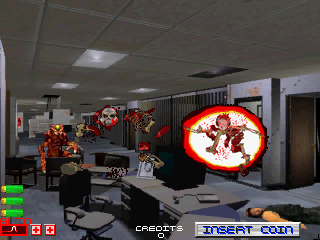
Doom. Such a fitting name. The popularity of this game nearly spelled out the death of the video game industry since politicians freaked out at the violence within this game. However, the popularity of this game also may have saved the industry as tons of gamers and gaming companies fought against the government hovering over them, claiming free speech in their products. Oh, and the game totally rocks, which is why it's on my list.


Title: Doom
Console: PC
Release Date: 12/10/93
Genre: First-Person Shooter
My Ranking: #35
-------------------------------------

I remember playing Doom for Windows 95 sometime around 1995 or 1996, when I was far too young to be playing a game that had so much blood and violence (psst, I was born in 1988). I had to play this game in secret because I didn't want my parents seeing me turn imps and soldiers into a pixelated bloody mush.

Violence controversy aside, Doom was an amazing game. At the time, the idea of first-person shooter was so new and fresh that the game felt and played unlike any other. My character is just a floating gun that doesn't really need to aim that much in order to do damage to enemies. The numbers on my keyboard change weapons as I get them, and boy, getting a new weapon in doom was equivalent to the feeling you get when you get a present on your birthday.

I remember when I first got the shotgun and suddenly I could take out imps with one shot at near-point blank range. I remember getting the rocket launcher and when you kill enemies with that gun, they are indistinguishable for any other enemy, since they turn into a bloody goo. And, who could forget the BFG 9000? That gun would obliterate anything in its path, and you only needed 4 shots with it to take down the final boss.


Doom was not addictive just for it's crazy awesome guns or for its blood and gore. Doom had excellent level design for one of the first first-person shooters. Switches changed the layout of the floor or would possibly unleash more enemies at you. You really did not know which. Every switch caused you to look around and say "hm, how can the developers screw me here?" Color-coded keys and doors also forced you to look in every corner, facing more tough enemies and possibly find some secret doors that you didn't even know existed.

Doom was incredibly hard as I remember as well. Maybe I was young and just inexperienced with shooters (as was everybody at the time) but bosses often ate up entire clips of multiple guns while if I was hit three or four times, I would die. It was happily challenging as I always felt that the bosses were difficult because of my lack of skill, not because they are cheap.


I think I've only beaten the original Doom once, since the game was pretty long and I was playing tons of games at a time as a child. Doom had to be on my list though since I remember playing the first couple of levels over and over again, just because I loved them so much.

Doom was the shooter that gave birth to all of the modern day shooters. If Doom was not as awesome and failed in the market, it is quite possible that Quake, Call of Duty, Halo, Medal of Honor, Gears of War, Team Fortress, or any other shooter would not exist as we know them today. If you have not played Doom, get on that right now. Not only was this game revolutionary for the genre but it also was the one of the primary causes for people to be worried about violence in video games. Doom is a historic game for the video game industry and for the culture around it. If you have an Xbox360, Doom is on Xbox Live. Go play it!
-------------------------------------
My Top 52:
#52 --- Star Fox 64 (N64)
#51 --- Kirby's Adventure (NES)
#50 --- Roller Coaster Tycoon (PC)
#49 --- Grand Theft Auto III (PS2)
#48 --- Metroid Prime (GC)
#47 --- Halo 3 (Xbox 360)
#46 --- Bomberman 64 (N64)
#45 --- Guitar Hero II (PS2)
#44 --- Super Street Fighter II (GEN)
#43 --- Pokemon Puzzle League (N64)
#42 --- Soul Calibur II (GC)
#41 --- Gears of War (Xbox 360)*
#40 --- Elite Beat Agents (DS)
#39 --- Call of Duty 4 (PS3)
#38 --- Super Metroid (SNES)
#37 --- The Orange Box (PS3)*
#36 --- Metal Gear Solid (PS)
#35 --- Doom (PC)

Top 40 Most Memorable Games #36

Again! Again!

Lima's Top 40 Most Memorable Games!

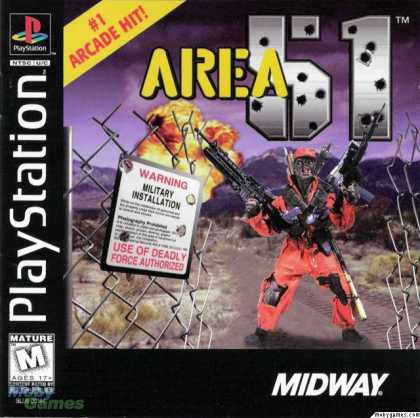
this week, AREA 51!
Would you believe that this is the only light-gun game that I've ever played? My dad bought Area 51 for the playstation one thinking it'd have zombies in it (a bit of a family obsession) and got two playstation guns so we could play co-operatively.Not to be confused with the playstation 2 Area 51, this game is a straight copy of the arcade game. Hence,10-15 minutes of gameplay from start to finish, three lines of dialog ("we need evac! we need evac!") AWFUL GRAPHICS, and the ability to shoot shoot good guys at the cost of a health point per kill. Needless to say, my family fought over the privilege.

I love this game like you love and old stuffed animal. the kind that has aged so that all the fur has worn off and the eyes are scratched and vacant in an undead sort of way. Your mother consistently tried to trick you into letting her throw it out and now that you're 20, it lives in the closet, covered in dust. sad, lonely, and possibly plotting your doom.

But when you notice it every once in a while, digging through the closet for a missing shoe, there's that old warmth that brings back the locations of each hidden hand grenade, and the whack-a-mole pleasure of shooting aliens in pipes. Ah, sweet childhood.

Thursday, November 6, 2008

Top 40 Most Memorable Games #37

Most late post ever! It's official, I'm doing the lame thing and combining this week and last week's post. Game 36 will follow. Between Halloween and midterms (you can guess which one took up more time) and blah blah blah...

Lima's Top 40 Most Memorable Games!
this week, SUPER MONKEY BALL : BANANA BLITZ

Ah, monkeys in bubbles. Good times. I'm gonna be honest here and let everyone know that as of yet, I've only played Super Monkey Ball for the Wii once. After an anniversary dinner with Rich. The game was my idea of a romantic present. He loved it.

I lost maybe 9 out of every 10 mini games and the bulk of them varied from retardedly difficult to Simon Says. I had a lot of trouble getting the fishing net/catapult/explosive banana to move where I wanted it to; my controller's batteries might have been running low. Luckily in this case, annoyance made the heart grow fonder. Again and again We threw horse shoes, missing to the whimpers of disheartened primates. Rock Paper Scissors proved to be hideously complicated, but fun.

All in all, the game was an energetic end to a marvelous evening. Long term, I have no doubt it would drive me up the wall. But with a belly full of peking duck, and the giddiness of day and company it came with, we could have been playing Madden and I'd still remember it for years.

Tuesday, November 4, 2008

5 Reasons I Love GTA4

Here are five of the reasons I love Grand Theft Auto 4, and two ways it could be better.

1. Expansive
There are so many options, most of which you can do at any time; vigilante cop missions, street racing, killing innocent pedestrians, dating, playing on the internet, bowling, and I could go on.

It's almost like an RPG where these aspects of the game are the huge selection of sidequests. In fact, this can be seen as a very non-traditional RPG in a lot of ways, as I'll discuss as we go through some of these points.


2. Solid (Main) Storyline
The side storylines are great, but the main story is really pulling me in. I haven't played through the full game yet, (this is 5 reasons, not a review) but so far it's been fantastic. They've managed to keep a diverse enough set of missions, which is big, since a game like this could easily fall into a rut of repetitive missions. There are clearly going to be common themes: stealing cars, killing cops/civilians/criminals, etc. but if you're getting bored with that, you probably never started playing GTA4 in the first place.

3. Voice Acting
Excellent voice acting has been an up and coming feature in games, with my favorite being Mass Effect (you'll be seeing a review of this eventually), and BioShock is another good example. There used to be some mediocre voice acting, which would make games take up multiple discs, but as technology has progressed this aspect of games has really blossomed.

This is especially relevant for RPGs, since a common criticism is that they are too text heavy as a result of their in-depth stories. Why do movies sell better than books? People don't like to read that much, especially with the crowd that would be playing GTA4, which probably isn't your typical RPG crowd.


4. Smooth Controls
When I'm speaking of controls, I don't just mean how natural it feels to steal a car, leap from building to building, or get in a knife fight with a gangbanger, but how the game itself is controlled. (Though the game controls themselves are done well.) In point #3 I talk about how much there is to do in the game. One option is to have a big map, and you can drive to different parts of the game. GTA does this, but they're not the first to do this. You could select different missions from the pause menu, but that wouldn't feel very streamlined; it would feel like a bunch of separate games.

The three ways that they do this effectively are through the use of your cell phone, and the ability to take cabs. With your cell phone, you can call up contacts, and start missions up; this will still require some driving, so it doesn't feel like you're skipping around, but it's not tedious either. Don't feel like driving across the city? Take a cab. It'll cost you some cash, but you'll save time, just like in real life.

5. Whelming
Don't be confused, this just means that it's not over or underwhelming. This sums up some of the above points in discussing the seamless integration of the game; combining points 1 and 2 (via point 4). Another way they do this is through the GPS unit. I have a terrible sense of direction in real life, and it only gets worse when I'm playing games.

A GPS in my phone in real life has done me wonders, and it's done the same in this game. I'm not just talking about a map in the pause menu, or overlaid on the screen which tells me where I am, but a HUD at the bottom of the screen showing me where I need to make turns. In a non-linear game focused on driving, this is a dealbreaker, and Rockstar did it excellently.


a. Stupid Cops
During the main storyline missions, the cops are fine, mostly because you always have a wanted rating, and they're chasing after you. However, during 'free play' if I'm just driving about, they're not so bright. If they see me steal a car, take down my license plate; have them be looking for me later if I'm dumb enough to not switch cars. I blow a red light right in front of you, while T-boning a car, and what do you do? Nothing! This is the type of thing I would like to see adjustable in by a difficulty option. It would be annoying if I couldn't speed without getting into a car chase, but if I want to play more stealthily?

b. Absurd Rating System
This is similar to point a, but different enough to warrant it's own point:

Shoot a pedestrian in the face, next to a cop. 1 star.
Shoot a cop. 3 stars.

That sounds like a fair comparison. Let's try another one:

Barely nick a cop because you didn't brake in time. 1 star.
Pull someone out of their car, stab them to death, and drive off in their car, whilst a cop watches. 1 star.

This aspect could have use some more balancing.

Image: Flickr
Image: GameSpot

Godspeed.

Fallout 3, the letdown and the addiction

I said before that I would review Fallout 3 when it came out and since I’ve been playing it quite a lot since I bought the damn thing I figured why the hell not. Though the problem of course is that everyone and their dog has reviewed this damned game. So I’ll base this review on the belief that you’ve already read one of the million or so other reviews and I don’t have to explain every damned thing from square one again. Ok? Good.

Fallout 3 is a fan’s game. By that I don’t mean that it’s a game made for the fans, but a game made by fans. Now at first glance that might sound nice, but if you’ve ever read any sort of fan fiction for a series (book, tv, movie, game, etc) that you liked, then you might just get what I’m talking about. For those who are blessedly unfamiliar with that genre of literature, let me put it this way. There are fans out there of the Harry Potter book series who enjoy it so much that they feel the need to write stories starring the characters in the books but in new situations. And seeing as many of these writers are some sort of odd fangirl, some of it is quite strange. Why someone would want to write a 300 page long love story about a gay romance between Harry and Ron Weasly, I don’t know, but I’ll bet it’s out there somewhere on a fan fiction site.

Now with that in mind, that’s the feeling you get from Fallout 3. It’s a good game, far better than Oblivion. However, it feels like it was written by someone who loved the series but missed some of the points. It feels like the entire tone and atmosphere of the first games was rewritten by the kind of person who frequently uses the word "Kewl" while online. It feels amateurishly written.
The game was implemented beautifully. The world is huge and it feels quite bleak. You wander about a lot, but due to the Fast Travel, system that returned from Oblivion (seeing as it uses the same game engine), once you find a place, you never have to walk there again. Instead you magically teleport there avoiding all enemies on the way.

But it feels like rather than going all the way with some concepts, the designers decided to pull their punches and make things easier. Radiation for example. You can easily get irradiated wandering through the wasteland, especially considering that everything you eat is irradiated (Which is a bit confusing really) and so is all the water. However you don’t have to eat so it doesn’t actually matter. Also there’s no apparent effect from the radiation unless you become absurdly irradiated. For example, by taking a swim in irradiated lakes or walking on up to a pool of water surrounding an unexploded nuclear bomb and taking a drink from it. Although, the anti-radiation meds that heal you can be found all over the damned place so it’s a moot point anyway.

But this issue fills the entire damned game. When you run into the traditionally tough and nasty monsters from the series (the super mutants and the Enclave soldiers). They turn out to be far to easy to kill. At one point I found myself standing about 20 feet from a super mutant who was enthusiastically trying to liquidate me with a giant fucking minigun. I at the time was level 4 (out of a max of 20) and armed with a hunting rifle, and wearing armor made out of old tires. I won. Not only did I win, but I took out his friend who was firing bazooka rounds at me from farther back. Now in the old Fallout games, if you met a super mutant and he was armed with a minigun, you would be granted the sight of your character being sawed in half by the spray of gunfire and you would have to hit reload and try again. In fact you best bet at not dying would be to shoot him in the head from very far away, over and over again with a plasma rifle until he died, or until your turn was up and he got a go. At which point, he killed you. The same goes for the Enclave soldiers. However, armor is so pathetically poor in this game that even the Enclave troops, wandering about in massive suits of sci-fi power armor, can be taken down by running up to them and unloading a shotgun in their helmeted faces. You might not be a god in this game, but you’re a demigod at the very least.

The reason for this is that the new skill system they use in Fallout 3, is a joke. In Fallout 1, if you had a 15% in small guns, it meant that you sucked and had a 15% chance of hitting someone if you were standing infront of them and they weren't moving around too much. In Fallout 3, having a 15% (out of a max of 100%) in small guns, means you only miss the target 15% of the time, but that's ok because every other hit is a critical hit and you do extra damage. However, the effect you skills has on combat vanish completely if you fight in a FPS style and decide not to use the quasi-turn based system they provide.

The game developers also seem to have felt that it was no fun having the powerful weapons only showing up later in the game, nor was scrounging for ammunition. Sure it’s a post apocalyptic wasteland, but does that mean we need to actually strategize? Laser weapons and portable nukes show up within an hour of starting your game and there’s no real feel that you’re struggling to stay alive. It seemed like it was at first, but then I found the town with the shop that sold an unlimited supply of ammo for every weapon (a major city in game that you can’t avoid). After that I was able to kill everything that looked at me funny in the damned game. And while how much you could carry was based on your character's strength score, that doesn't alter your tactics one bit as all ammo and healing items are weightless. So you only have to worry about armor and weapons.

There are a lot of good things about this game, but every other reviewer has gone on incessantly about them already so fuck that. It’s a badly written, badly planned piece of crap at heart, but the gameplay actually makes up for it and it’s in a weird way, not a half bad Fallout sequel. So here’s my advice. Rent it if you have a console, but buy it only on the PC. Bethesda has a bad history of patching their games and they never fix everything that desperately needs fixing. On the PC versions of their games, it’s always the fan mods and fan patches that do this. Though in Fallout 3's case that’s iffy as well as the bastards still haven’t said one way or the other, if they’re going to release the mod tools for this one as they have for every other game of theirs. Without those tools, modding is still possible (there are at least 10 good mods out for it already), but it’ll be very slow and you won’t see very many produced, nor will you see the kind of fan patches this game so desperately needs.

There are also a great many things that Bethesda promised the game would contain and well, frankly just lied about. The game isn’t open ended. You finish the main quest, the game is over. No more playing, start again, good bye. There are also only 2 radio stations worth listening to ingame, and they both play the same crap over and over and over again. You can find and fix old radio towers to add new stations, but they don’t do shit.

That aside, it’s a good game and worth playing and I’m currently very addicted to it. I myself bought the special edition of the PC version which means I got a cool metal lunchbox, and a Vault Boy bobblehead which is perched proudly on my desk. This is the only time I’ve ever not hated myself for buying the more expensive special edition of any game.

Monday, November 3, 2008

Play Money, Virtual Worlds and Ludocapitalism

Don't run away just cause you saw the word "capitalism" in the blog post title. This post is about gold farming in online games like World of Warcraft, Ultima Online, Second Life, etc. I recently read this book called Play Money by Julian Dibbell and went to a lecture he had at NYU. Dibbell has an interesting story to tell: he was a gold farmer who made made thousands selling virtual gold and items on eBay. If he had gold farmed full-time and quit his writing job, he would have made more than enough money to support himself and his family; all while working at home playing games.

Below is a response paper I just finished writing for my "Hacker Culture and Politics" course relating to Dibbell's book, ludocapitalism (don't worry, I explain it), and the pleasures of work as play. It's definitely academic, but you should enjoy it.
------------------------

Julian Dibbell’s brief venture to gold farming in virtual worlds may have caused him to discover what may be the driving force of capitalist economies in the 21st century: Play. Ludocapitalism, as Dibbell puts it, is a belief that looks at the labor experience as a game and it could drive economies both virtual and real. This concept works because some theorists, as writer Martha C. Nussbaum highlights, believe that play and pleasures are the never-ending goals of human existence.


By the second half of Dibbell’s book, Play Money, Dibbell is deep into adventuring in Ultima Online (UO), a massively multiplayer online role-playing game (MMORPG), and he is raking hundreds of dollars each week buying and selling virtual goods. Instead of killing enemies and participating in traditional quests, Dibbell has decided to play game within the game world of UO, becoming a trader who sells items and gold within the game and on auctioning sites like eBay.

The goal of the Play Money project was to make more money gold farming than Dibbell has even made in a year as writer. Though he just barely failed in that goal in the end, Dibbell does admit that selling virtual goods is a viable form of living; “a $47,000 income wouldn’t have topped my best year writing, no—but on the other hand, to be honest, it would have topped all the other years” (Dibbell, 292). Since gold farming is productive then, virtual world trading is one of the first steps in actively pursuing a ludocapitalist economy.

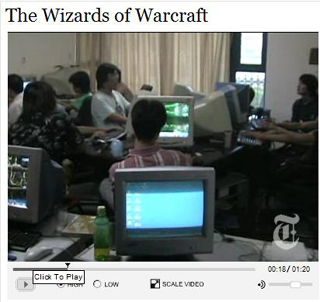
At the lecture Dibbell gave at NYU, Dibbell makes a strong argument as to how work as play can be productive, and fun. Dibbell said that he visited a “Chinese gold farming sweatshop” in which tens of workers played World of Warcraft (WoW, another MMORPG) for 12 hours a day, seven days a week as their regular job. Despite constantly doing the same tasks over and over again, even when these workers received their break, they played their personal accounts on World of Warcraft and discussed how they could improve on their characters. The physical social environment of the sweatshop still made the game fun—despite the tedious tasks—since they were playing a game.


While working, many of these gold farmers stare at trading markets all day, buying low and selling high. Some of them run around in virtual cave, mining ore and creating swords with some simple keystrokes and clicks. The monotony seems similar to that of a cubicle job, checking for typos on documents and creating cover sheets for business plans. Yet, online players feel a sense of pleasure in their work; why is this?

One answer may be because games like World of Warcraft are encouraging in their nature. When you successfully mine, you may get a message saying your mining skill increased, which is rewarding and self-encouraging. The game is constantly telling you how you are improving, while most desk jobs do not. The social environment is also satisfying. Julian Dibbell made tons of friends in his UO community, from Bob to Rich and the 17-year-old Radny. He didn’t even want to be social but the game and his trading business pushed him in that direction and he seemed to enjoy the interaction throughout his book.

Since the game (and the in-game community) in constantly being supportive, there is a sense of pleasure and satisfaction even when doing work. Ludocapitalism then, works even from a production perspective. “The goal of right action is to maximize pleasure, understood as a sensation. That is the only good thing there is in the world” (Nussbaum). The bonus with gold farming is that the maximization of pleasure is also useful to the economy.

However, the birth of virtual world economies raises some troublesome questions. Since gold can be exchanged for physical dollars, virtual gold has become its own currency. And since every item in virtual world games then have a real cost, do online game players have to report their earnings to the IRS, even for something as simple as skinning in-game leather and selling it? If I were to find a rare sword and sell it, either in-game or on eBay, should I be taxed by the IRS for my trade?


As of now, the IRS is reluctant to get involved in taxing virtual worlds since they don’t know exactly how to handle it. It would be difficult for game companies to release a quarterly report of all barters within their game and then expect its players, which may include 4-year olds, to be taxed. However, what is stopping companies from converting all their assets into Linden (the currency in Second Life, another online virtual world) and then avoiding taxation on their company? The SEC, IRS and the game companies are all going to affect how virtual loot is treated from a socio-economic standpoint and if taken care of correctly, ludocapitalism can become a breakthrough for economic theory.
-------------------------

I also wrote an entry in Will's blog about gold-farming about how one study suggests that gold farming could be used to help provoke development in third-world countries. You can check that out if you want to add another layer to the discussion of virtual world trading for real economic gain.

If you have any interest in virtual worlds or online games I highly suggest reading Play Money. It's a super-quick read, very informative, and it's genuinely hilarious. That's saying a lot also, since people who know me know I don't like reading. However, I do have questions for you, if you've read this far. Do you think ludocapitalism can work as an economic model? Can games be a viable future for production?

Sunday, November 2, 2008

Digital New Media Timeline (#13 - #24)

Yep, more Digital Timeline stuff. Despite the New Media Reader textbook looking really daunting, the information is an easy read. Maybe that's because I actually like the subject. Feel free to ignore this entire post, as history may not be an interest of yours. All parts of the timeline though have affected the growth of the gaming world, though the connections may not be that easy to see.


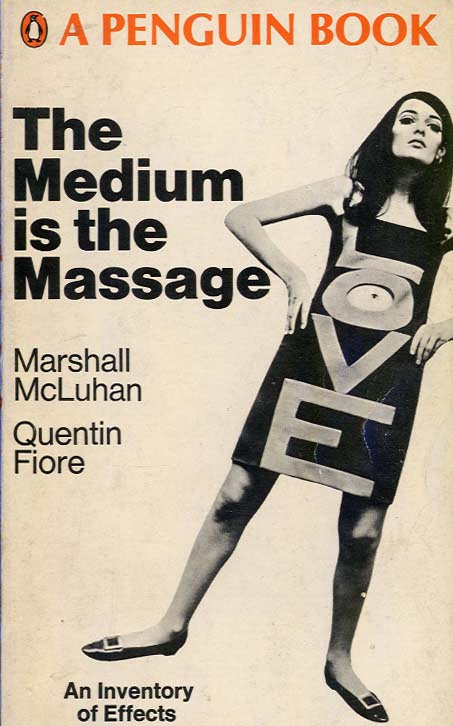
#13- The Galaxy Reconfigured & The Medium is the Message
Marshall McLuhan, 1962, 1964
--Questioned the effect of electronic media on literary form.
--"The medium is the message" refers to how the form of information shapes human association and interaction.
--Argued that media is the extension of human senses.

Response: I just started reading McLuhan's Understanding Media, and the timeline above doesn't do justice to the influence McLuhan has had on the media world. Almost all of the authors after McLuhan reference McLuhan in some way and the statement of "the medium in the message" has influenced discourse about the effects of the internet, which has boomed on our world only recently. McLuhan's idea of "the medium is the message" was such forward thinking for its time and it did not refer only to the television, but to all forms of media both before and after he made that claim.

#14- Experiments in Art and Technology
Various Authors, 1961, 1966, 1967, 1972
-- E.A.T. is a non-profit organization that brought together computer engineers and artists in order to promote artistic new media.
-- E.A.T has helped support musician John Cage and artist Andy Warhol.

#15- Cybernated Art
Nam June Paik, 1964
-- One of the first artists to use television for art.
-- One of the pioneers of the Neo-Dada art movement (along with John Cage)
-- Paik has made robots out of television sets.
-- Paik pushed for cybernated art, which is that artists should embrace the technologies of an information society.

#16- A Research Center for Augmenting human Intellect
Douglas Engelbart and William English, 1968
-- This essay introduced the term mouse and "ARPA computer network" or ARPANet.
-- The research center is one of the first to hold demonstrations of interactive computing.


#17- From Software-- Information Technology
Various creators, 1970
-- Around this time, many artists saw information technology as a viable medium for art.
-- The PDP-8 ran Labyrinth, an interactive text retrieval system.

#18- Constituents of a Theory of the Media
Hans Mangus Enzensberger, 1970
-- Enzensberger argues that despite the big business of media, people should fight for the freedom of media in society.
-- Enzensberger believes that media is the best way to mobilize a collective populous.
-- Enzensberger argues that the formalization of written language represses opposition and the flow of sharing information.

#19- Requiem for the Media
Jean Baudrillard, 1972
-- Baudrillard argues that media acts as a poor filter that prohibits the interaction of its users.
-- He also argues that making everyone into a media producer will not help reciprocate and share ideas.

#20- The Technology and the Society
Raymond Williams, 1972
-- Williams introduced the concept "flow," which is the fluid combination of what makes up a television program, including the main content and commercials, and how that experience shapes thought.
-- Argues that while the television leads to manipulation and mindless entertainment, if the television had not been made, another technology would have taken its place and affected us in a similar way.


#21- Computer Lib/Dream Machines
Theodor H. Nelson, 1974
-- These are the fundamental texts that changed people's perception of a computer as just a "computing machine" to a computer as a viable social technology.
-- These books came out before the Altair (the first PC), and accurately predicted the effects of personal computers in our information world.
-- Nelson saw the computer as a machine that would facilitate design among people of all ages and that the experience of a computer would be liberating.
-- These books helped simplify the view of computers, making them more accessible.

Response: Computer Lib and Dream Machines looked like kid-friendly books, which, if that is the case, is a fantastic idea since children would be more willing to learn new technology and learn in faster. Regardless, the kiddy look and feel of the book changes the perception of computers, since they were viewed as machines for intellectuals and academics. Despite not being user-friendly quite yet (the books came out around the same time as the Altair), Nelson was a visionary and broke the perceptions of computers. His work alone may have pushed the development of computing technology and art by a couple years since his work inspired many to use computers.

#22- From Theater of the Oppressed
Augusto Boal, 1974
-- Boal has gone to jail for encouraging the interaction and mobilization of oppressed people in South America.
-- Boal saw theather as a medium for discourse that would bring people together under one cause.
-- Boal saw theather as a way to connect closer with the body.

#23- From Soft Architecture Machines
Nicholas Negroponte, 1975
-- One of the first people to use computers for architectural design, which, in turn, affected virtual reality architecture.
-- Negroponte founded the Architecture Machine group at MIT which heavily influenced the the design of software.
-- Negroponte is also the chairman of the One Laptop per Child movement, which makes laptops affordable for children to use around the world.

#24- From Computer Power and Human Reason
Joseph Weizenbaum, 1976
-- Weizenbaum made a successful "computer therapist" named ELIZA, that, while using simple string replacements, mimicked human reason.
-- Weizenbaum's work made people concerned that computers can and will take over all jobs that provide income.
-- Weizenbaum's computer programs showed that human beings can gain an deep emotional connection to machines.

The links I provided will really help you out if your confused as to what each of these writers/artists contributed to the New Media community. New media does include video games by the way, so knowing about this stuff will help you understand the culture that made video games before there were any video games to begin with.