As I'm drawing near the end of the semester, I have finished more of the New Media Reader for my Digital New Media class. Featuring articles from the late 70's and early 80's, these selections show how perceptions of the computer constantly changed and we also see the birth of video game technologies, how they were percieved and how they affected the growth of new media.
#25- Responsive Environments
Myron W. Krueger, 1977
-- Kreuger is often placed as "the father of virtual reality" and his ideas on how a computer can interact with humans may have influenced, on a long-term scale, the makings of the game Second Life.
-- Krueger argues that the "response is the medium," unlike McLuhan's assertion that "the medium is the message."
#26- Personal Dynamic Media
Alan Kay and Adele Goldberg, 1977
-- Kay and Goldberg were the first to see the computer as an all-purpose moveable machine (a.k.a. laptops) for anyone to use.
-- Kay was part of Atari's short-lived research lab that was dismantled after the first video game industry crash.
#27- From A Thousand Plateaus
Gilles Deleuze and Felix Guattari, 1980
-- As philosophers, Deleuze and Guattari raised issues in metaphysics and epistemology, and hinted that computers could create unstable identities for humans.
-- They introduced the idea of rhizomatic writing which, simply put, is how one writes to exude hypertext (think Borges).
#28- From Mindstorms: Children, Computers and Powerful Ideas
Seymour Papert, 1980
-- Papert made a programming language called LOGO that was designed to teach children an easier programming language.
-- Though the beginnings of video games were slowly bringing a younger audience to computers and technology, Papert was dedicated to bringing the creative powers of a computer to children.
#29- "Put-That-There"
Richard A. Bolt, 1980
-- Put that there is an interface that combines speech and gestures to have interaction a computer. Voice-activated technology is still being improved today, and Bolt pioneered in in 1980.
-- Bolt's "Put-That-There" was an attempt at making the computer a more intuitive human-like technology.
#30- Proposal for a Universal Electronic Publishing System and Archive
Theodor H. Nelson, 1981
-- The title of this chapter says it all. Nelson was not only suggesting a digital library system (i.e. the web) but, also his ideas influenced the concepts of Weblogs, or just blogs.
-- While the ideas of hyperlinks are understood now, Nelson how to lay out, piece-by-piece, how hyperlinks would work and help computer users.
#31- Will There Be Condominiums in Data Space?
Bill Viola, 1982
-- Bill viola is a famous early video artist who has been featured at big museums like Whitney museum.
-- Viola makes an argument that the video is an improved extension of the human memory.
#32- The Endless Chain
Ben Bagdikian, 1983
-- Bagdika argues that all media is part of chain that eventually become connected through one form or another.
-- Compatibility is important for old media to survive. In order for radio and television to stay alive in our new media environment, Bardikian argues that they need to adapt to the culture and find a way to seep into new mediums.
#33- Direct Manipulation
Ben Shneiderman, 1983
-- A Direct Manipulation system suggests that what happens on screen will mimic what the user is doing. For example, if you shoot a gun in a video, a direct manipulation tactic would be to have the button be trigger, like the Z-button on the N64.
--Shneiderman argues that computer should move towards a direct manipulation system so to make it easier for new users to use the computer.
#34- Video Games and Computer Holding Power
Sherry Turkle, 1984
-- Turkle studied how people act when they play games. She noticed that when people play a pinball machine, they move their bodies to emulate the ball. However, when people play something like Pac-man, they hardly move at all even though that they are the big yellow mouth. One theory on why there is less movement is because the lack of a physical space for the game forces people to become immersed with the visual experience and therefor exude no kinetic experience.
-- Turkle also suggests that gamers care less about narrative in games because the interactivity of a game already allows them to create their own story, even if they are trapped in a highly rule-based world.
#35- A Cyborg Manifesto
Donna Haraway, 1985
-- Haraway argues that a cyborg would be a better image for women to pursue than a goddess since cyborgs deal with the "here and now."
-- Haraway also argues that computers and technology can be liberating for women and that if used properly, can help drive a socialist-feminist movement with their communicative powers.
#36- The GNU Manifesto
Richard Stallman, 1985
-- Stallman is probably the most famous free software hacker ever. His GNU project attempted to create a operating system that would rival UNIX and be completely free and open source.
-- Stallman is also famous for helping drive the "copyleft" movement, which is essentially a culture full of sharing information and no intellectual property. In essence, it's the opposite of copyright laws.
#37- Using Computers: A Direction for Design
Terry Winograd and Fernado Flores, 1986
-- These two authors argue that computers should not try to emulate artificial intelligence and focus more on using the computer as tools to help people with tasks and design.
-- Their plea made programmers reconsider the effects of computers and some people began to see the computer as just a powerful machine, not a human-like machine.
#38- Two Selections by Brenda Laurel
Brenda Laurel, 1986, 1991
-- Laurel helps layout the differences between different dramatic elements in drama and human-computer activity. The overall difference human-computer activity is more interactive and that human-computer activity uses more graphical "language" for pleasure.
-- Plot, especially in video games becomes very blurred. Laurel argues that new media technologies will alter how we view drama.
#39- Towards a New Classification of Tele-Information Services
Jan L. Bordewijk and Ben van Kaam, 1986
-- These authors look at the social role of media, and foresaw a change in language and how people converse. IRC channels and even conversations in various MMORPGs are predicted in this essay, years before their conception.
-- Their ideas on how information travels formed the foundations for new media studies.
Note: Hyperlinks and reactions are to be added later in an update of this post.
Tuesday, December 9, 2008


Wednesday, December 3, 2008
5 Minutes/5 Games: Volume 3
Will started this segment a while back, and I really liked the idea. Take 5 random games from your collection, play them for 5 minutes and then report. It's similar to the Games for Lunch segment by Crispy Gamer, but with more focus on a variety of games rather than one focus.

1. The Battle of Olympus
This game moves, feels and looks like Zelda II. In fact, I'm pretty sure it runs on the same engine. I didn't like Zelda II, nor did I like this game that much. The combat is somewhat interesting as you need to time jumps correctly and strike and the right time, but it's been done before with Zelda II, and done better.
Will I play this again? No. Did I mention that this game plays like Zelda II?

2. Bible Adventures
Oh Bible Adventures. I've played you before. Bible Adventures is a platforming game revolved around Bible stories. I played the David and Goliath set, which involves collecting sheep. David was a sheep herder; I think. The premise is hysterical and the game kinda sucks, but it's all in good fun. "Good work, but you forgot Baby Moses." Priceless.
Will I play this again? Definitely. Just for the humor factor.

3. Tecmo Bowl
Wow. The random number generator favors me big time. Tecmo Bowl is only one of the best football games ever made. Yes, it schools Madden hardcore. You have a choice between two run plays and two passing plays and if the defense picks the same one, you're going to lose yardage. If not, you have a chance to make big gains. It's simple, yet tactical and fun. Ready! Down. Hut!Hut!Hut!
Will I play this again? Super definitely. Two-player Tecmo Bowl is INTENSE.

4. Flight of the Intruder
A flight simulator on the NES? Cool. It doesn't play particularly well and the flying is pretty choppy, but it does capture the feel of a first-person flight simulator pretty well. Aiming is hard, and dodges missiles is disorientating but I kinda enjoyed this game. Maybe I'm just in desperate need of good flight sim besides Warhawk.
Will I play this again? Probably not. But I'm glad I tried it.

5. A Nightmare on Elm Street
This is just confusing. You're a dude in an orange jumpsuit and you punch bats and rats. And occasionally Freddy comes out and you have a random pseudo-boss fight with him. Dude, it's TOTALLY like the movie. I mean, did you see the title screen for this game? Scary stuff.
Will I play this again? No way. I'd rather be stabbed in the toe.
Winner: Tecmo Bowl
Loser: A Nightmare on Elm Street
Tuesday, December 2, 2008
Top 52: Super Mario RPG: Legend of the Seven Stars (#31)
Super Mario RPG was the first Mario RPG and it certainly was not the last. The success of this game influenced the development of other great Mario RPG games from Mario & Luigi Superstar Saga, to the Paper Mario series. This isn't just some shovelware Nintendo put out with Mario's name on it to make a quick buck. It's a fantastic game.

Title: Super Mario RPG: Legend of the Seven Stars
Console: Super Nintendo
Release Date: 05/13/96
Genre: Role-Playing Game
My Ranking: #31
-------------------------------------
Squaresoft and Nintendo? What an odd combination. One company focuses on JRPG's and fancy stories while the other features a plumber with a red hat who never actually does any plumbing. This game was destined to fail miserably but I decided to give in a shot anyway. What I ended up playing was one of best RPG's ever made.
Super Mario RPG starts off like any other Mario game. Princess Toadstool got kidnapped by Bowser again and you got to rescue her sexy ass. However, upon reaching the princess, a gigantic sword appears on top the castle and blocks off the entrance, while sending the princess, Bowser and Mario to separate sides of the world.
Since Mario doesn't speak in the game, he has to explain things with his actions. To describe a bridge being destroyed, he stands on top of table, walks off it, notices there is no ground and jumps back to the table and shakes his head. Or, when being questioned as to whether he is the real Mario, he just jumps really high, which tends to impress a lot of people. The cute and humor factor here is priceless.

The battle system was also top notch. Featuring a turn-based system, Mario and his team can attack, use items, and do Mario-style special attacks, like any standard RPG. What sets this game apart though, is the "timed hits" mechanic. For every attack, including every special move, the player must press the attack button at the right time or hold it for the right amount of time in order to deal more damage. The RPG system in Super Mario RPG was more dynamic in this regard and involved more input than just selecting commands.
The music in Super Mario RPG was also superb. Some of the songs referenced older Mario games, but most of them were original tracks that seemed to fit the Mario universe. The game felt like a Mario game from every angle, except for the fact that it was a RPG.
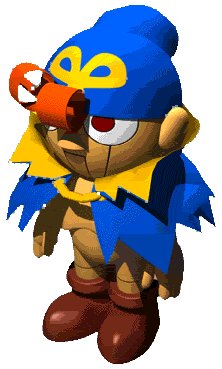
Mario didn't just jump on people too. He used shells and hammers as weapons and one special attack had fireballs. His teammates did feature Mario characters like the Princess and even Bowser, but the new Squaresoft additions of Geno and Mallow were also interesting. Mallow is a cloud who thinks he's a tadpole and Geno is a warrior from the Star World sent to help recover the lost stars in Mario's world.
There's nothing particularly wrong with Super Mario RPG. It really was a solid RPG in its own right, even without being set in a Mario universe. Having the Mario characters was a big plus and it helped push the story and make cute references to the series. The game was fairly long, difficult enough to be entertaining but not frustrating (@#$% that optional Culex battle though), and I never remember there being a dull moment in the action or story. Seriously, if you like RPGs, or even Mario games, you'll find something in Super Mario RPG that will make you love it and keep on playing.
-------------------------------------
My Top 52:
#52 --- Star Fox 64 (N64)
#51 --- Kirby's Adventure (NES)
#50 --- Roller Coaster Tycoon (PC)
#49 --- Grand Theft Auto III (PS2)
#48 --- Metroid Prime (GC)
#47 --- Halo 3 (Xbox 360)
#46 --- Bomberman 64 (N64)
#45 --- Guitar Hero II (PS2)
#44 --- Super Street Fighter II (GEN)
#43 --- Pokemon Puzzle League (N64)
#42 --- Soul Calibur II (GC)
#41 --- Gears of War (Xbox 360)*
#40 --- Elite Beat Agents (DS)
#39 --- Call of Duty 4 (PS3)
#38 --- Super Metroid (SNES)
#37 --- The Orange Box (PS3)*
#36 --- Metal Gear Solid (PS)
#35 --- Doom (PC)
#34 --- Super Mario Kart (SNES)
#33 --- Mischief Makers (N64)
#32 --- Super Smash Bros. Brawl (Wii)
#31 --- Super Mario RPG: Legend of the Seven Stars (SNES)

Title: Super Mario RPG: Legend of the Seven Stars
Console: Super Nintendo
Release Date: 05/13/96
Genre: Role-Playing Game
My Ranking: #31
-------------------------------------
Squaresoft and Nintendo? What an odd combination. One company focuses on JRPG's and fancy stories while the other features a plumber with a red hat who never actually does any plumbing. This game was destined to fail miserably but I decided to give in a shot anyway. What I ended up playing was one of best RPG's ever made.
Super Mario RPG starts off like any other Mario game. Princess Toadstool got kidnapped by Bowser again and you got to rescue her sexy ass. However, upon reaching the princess, a gigantic sword appears on top the castle and blocks off the entrance, while sending the princess, Bowser and Mario to separate sides of the world.
Since Mario doesn't speak in the game, he has to explain things with his actions. To describe a bridge being destroyed, he stands on top of table, walks off it, notices there is no ground and jumps back to the table and shakes his head. Or, when being questioned as to whether he is the real Mario, he just jumps really high, which tends to impress a lot of people. The cute and humor factor here is priceless.

The battle system was also top notch. Featuring a turn-based system, Mario and his team can attack, use items, and do Mario-style special attacks, like any standard RPG. What sets this game apart though, is the "timed hits" mechanic. For every attack, including every special move, the player must press the attack button at the right time or hold it for the right amount of time in order to deal more damage. The RPG system in Super Mario RPG was more dynamic in this regard and involved more input than just selecting commands.
The music in Super Mario RPG was also superb. Some of the songs referenced older Mario games, but most of them were original tracks that seemed to fit the Mario universe. The game felt like a Mario game from every angle, except for the fact that it was a RPG.
Mario didn't just jump on people too. He used shells and hammers as weapons and one special attack had fireballs. His teammates did feature Mario characters like the Princess and even Bowser, but the new Squaresoft additions of Geno and Mallow were also interesting. Mallow is a cloud who thinks he's a tadpole and Geno is a warrior from the Star World sent to help recover the lost stars in Mario's world.

There's nothing particularly wrong with Super Mario RPG. It really was a solid RPG in its own right, even without being set in a Mario universe. Having the Mario characters was a big plus and it helped push the story and make cute references to the series. The game was fairly long, difficult enough to be entertaining but not frustrating (@#$% that optional Culex battle though), and I never remember there being a dull moment in the action or story. Seriously, if you like RPGs, or even Mario games, you'll find something in Super Mario RPG that will make you love it and keep on playing.
-------------------------------------
My Top 52:
#52 --- Star Fox 64 (N64)
#51 --- Kirby's Adventure (NES)
#50 --- Roller Coaster Tycoon (PC)
#49 --- Grand Theft Auto III (PS2)
#48 --- Metroid Prime (GC)
#47 --- Halo 3 (Xbox 360)
#46 --- Bomberman 64 (N64)
#45 --- Guitar Hero II (PS2)
#44 --- Super Street Fighter II (GEN)
#43 --- Pokemon Puzzle League (N64)
#42 --- Soul Calibur II (GC)
#41 --- Gears of War (Xbox 360)*
#40 --- Elite Beat Agents (DS)
#39 --- Call of Duty 4 (PS3)
#38 --- Super Metroid (SNES)
#37 --- The Orange Box (PS3)*
#36 --- Metal Gear Solid (PS)
#35 --- Doom (PC)
#34 --- Super Mario Kart (SNES)
#33 --- Mischief Makers (N64)
#32 --- Super Smash Bros. Brawl (Wii)
#31 --- Super Mario RPG: Legend of the Seven Stars (SNES)
Monday, December 1, 2008
5 Minutes/5 Games: Volume 2
As I said last time, on 5 minutes with 5 games, I shall randomly choose 5 games from my gigantic collection of old games, and give you my 5 minute impression of these games. Hopefully this will give both of us a chance to see games that we never have before.

1. 1943
Wikipedia tells me that this was the sequel to 1942. It's your basic top down scrolling shooter. There's really nothing special about this, or so I could tell from 5 minutes with it.
Will I play this again? Doubtful.

2. Athena
I'm not sure why it's called Athena; maybe I am Athena, or I'm trying to save her? I'm a girl who runs around and hits monsters. Sometimes they drop weapons or armor, which I can pick up and use to hit other monsters. That's about all I gathered, but I'm inexplicably drawn to it.
Will I play this again? For some reason, yes.
3. Championship Pool
The usual site doesn't have a link for you to play it, but here's some captivating gameplay captured on YouTube. I don't have much to say; it's a pool game. A shitty pool game. I regret randomly arriving at this.
Will I play this again? Very much not.

4. Dragon Fighter
It reminds me of Mega Man, if he had a sword, and was in the arctic. I wasn't fighting dragons, but instead they were more like green yetis. If I spent more than 5 minutes with it I might get to a dragon eventually.
Will I play this again? Absolutely.

5. Ghostbusters 2
Enjoy being frustrated by difficult yet not that fun games? Sounds likes Ghostbusters 2 is the game for you! There are many worse games for the NES, and in fact two of them are discussed here in this post.
Will I play this again? Maybe if I was feeling really nostalgic for Ghostbusters.
Winner: Dragon Fighter
Loser: Championship Pool
Godspeed.
Intro to RPGs (editorial warning)
Up until now, I've limited myself to writing about video games and the like. But in doing so I have avoided a great and mighty area of my own personal knowledge. I speak of course of traditional tabletop RPGs. I plan on writing about specific topics in this area but first I thought I'd explain some things.
Now for those of you who don't quite grasp what I'm talking about, prior to video game RPGs, people would get together around a table with books, paper and dice and partake of a more rudimentary version of what you know of as Role Playing Games. And believe it or not they did so without computers. Their imaginations were the Graphics cards, their dice the CPU, and bits of paper and reference books the hard drive or the program (I don't really care, pick your own computer analogy here). In fact, video game RPGs were actually a rather clumsy attempt at recreating this experience. It was a truly wonderful social experience that tapped into the creative genius of all involved.
Now were surrounded by assholes who only think of Final Fantasy or World of Warcraft when you mention RPGs. *eye twitch*
Here's a quick lesson for all of you, my faithful (and few) readers. Video games aren't RPGs, though Massive Multiplayer Role Playing Games come at least a little close. "But why" you ask? "Why isn't _______ an RPG? It's got experience points and characters leveling up. Doesn't that count?"
No.
The point of a RPG (or Role Playing Game) is that you take on a role of the character you are playing. You decide what choices and actions that character makes. You become involved in their imaginary life and as a result become very interested in what goes on in it. You also have a CHOICE as to what to do. Why isn't Final Fantasy 7 a real RPG? Can you decide halfway through the game to ditch Aeris and instead pursue a more meaningful relationship with Tifa (who seems to actually be interested in you)? Nope? Hmmm. Ok, can you use a phoenix down to bring back someone lost in a cutscene? No again huh? Can you tell both girls to screw off, ditch the party and seek out that strange yaoi relationship that fills so many god damned fangirls' perverted dreams? Not a chance.
Video game RPGs aren't really RPGs because they rarely give you any real choice in the outcome of the story and for the most part they direct you along a very linear plotline. There are the few gems that give you different endings based on what you did, but for the most part all you get to do is customize the characters you use to do what the developer's want you to do.Now there's a good reason for this. It's not realistic or even sane to ask otherwise of a video game designer because he's trying to cram an entire game into a single (usually) CD/DVD/cartridge. Sometimes you have to pick you battles.
Now the big online RPGs like World of Warcraft and Everquest come close because they allow the players to create somewhat unique characters and then do whatever the hell they want to do with them. You want to quit killing things and devote your undead warlock's unlife to selling fine merchandise at low, low prices? There ya go, enjoy. These games only come close to being real RPGs because you really can't do anything you want. You have choice, but it's limited to what they programed into the game. For instance, in WoW, can you decapitate the head of your neighbors and place them on spikes around your own personal bordello? How about this, can you come up with a plan to destabilize the economy of the region allowing you to buy up the cheap real estate and then broker that power in an attempt to overthrow the king? My point exactly. The one RPG that actually came even close was Second Life. But then it relied on its users to design and program it, and well, the great sea of lazy on the net far outshines the tepid pool of competent and willing programers.
That being said, table top RPGs are still around and kicking. They are a popular little sub culture of gaming and doing quite well in general. They are not however, a massive money making concept waiting to be tapped. A fact that has caused much worry in the gaming community as corporation after corporation fails to learn this lesson. More on that some other time.
These games come in all sizes and styles, from the simple to the insanely complex. There are detective games, horror games, Sci-fi games (take your pick, Star Wars, Star Trek, Dr. Who, etc...), fantasy games, and on and on and on. There's a Final Fantasy game where you can do all of those things I mentioned earlier and more. All you need is a copy of the rules, some friends, and a place where you can hang out and play. Maybe some dice, but depending on the game it might not be required. At their core these are social games. Your experience is enriched by interacting with other people and bouncing ideas off them. By your decisions you create the game and drive the story.
Sadly it is not as shiny and happy a hobby as one would expect. I both regret and am thankful that there are many new gamers these days who know nothing of the darker times. The political bitching brought about by the likes of Grand Theft Auto, pales in comparison to what faced gaming all those years ago. There was a time when priests would give sermons denouncing the evils of such RPGs as Dungeons and Dragons (which became a generalized term for any RPG at the time). D&D was the first real RPG and it was the biggest too, which made it the biggest target. In comparison, imagine if a major news agency started going on and on about there being a baby raping scene in Halo 2, and despite the fact that it's a blatant lie with no backing at all, churches, schools and police begin believing it and start acting upon that belief.
Now things did get better, but it took awhile and there are still people out there who think D&D is a Satanist tool designed to attract young minds. This really wasn't made any easier when the Vampire: The Masquerade RPG (play as Anne Rice inspired vampires) started up a LARP. LARP stands for Live Action Role Play, which is basically where people dress up and play act as their ingame characters while using a dumbed down rule system. If you ever see people running around a park dressed like wizards, knights, jedi, whatever, and hitting each other with soft foam swords, now you know what they're doing. However the Vampire LARP, really started attracting the goth crowd and...well, it just got bad. Really bad. How bad you ask? You ever see those people who go goth, get their teeth altered to look like vampire fangs, and start insisting that they be called by names taken from "Interview with a Vampire"? That's how bad it got.
With that in mind I'll end by explaining that when you play a tabletop RPG, you do not have to act out what your character says or does. Sometimes a little of that where dialog in concerned makes the game a little more fun, but for the most part it just weirds the other players out. Most of time, the dialog in these games sounds a bit like this (so to speak).
GM (guy running the game): Ok, Bilbo is about to drop the ring in the volcano, but then he suddenly gets this strange look in his ey...
PLAYER 1: I shoot him.
GM: What?
PLAYER 1: My elf shoots him with an arrow. The little bastard finally went evil and I'm not giving him a chance to put the ring on.
(Player rolls some dice to see if he actually hits the hobbit. He rolls high enough and succeeds)
GM: Um...you just killed Bilbo.
PLAYER 1: And now I kick him over the side into the lava.
PLAYER 2: Wait! Get that magic shirt off him first. That stuff was pretty cool.
GM: Ok, well your elf feels horrible about killing his good friend like that.
PLAYER 1: Yeah, ok, fine. Though he still thinks it was for the good of all mankind. He'll go donate something to some orphans to appease his conscience later if that helps.
And let me leave you with this. While there is still an air of nerdishness and strangeness about games such as D&D, don't judge or let it sway you from giving these games a try. Hell, even Vin Diesel used to play.
(If any readers feel offended or angry over the content of this article, please bear in mind that the author is suffering from sleep depravation and neither his comments nor his stated religious, political, or moral positions should be taken seriously or really read at all. Doing so only encourages him.)
US Video Game System Quiz
Can you name the Video Game Systems (released in the U.S.)? That statement burned in my mind for 12 minutes. This game, which I was linked through Kotaku, asks you to name all of the video game systems released in the US. They are missing some, like the Sega 32X, which confused me because I was SURE it was system. Thankfully, by not having the Sega 32X, it focused my mind on the "32," which reminded me of the Amiga CD32. (There, that was a freebie!)
I'm sure they are missing some others, but whatever, it was still fun to take the quiz. I managed to get a very high 46 out of 68, two of which were accidental. That makes up for two easy ones I should have got, which are the 3DO and CD-i. Damnit. Anywho, you can see my results below. The red are systems I missed, while the black are ones I got. I blurred the image so it doesn't give away answers either. Mwa ha ha ha.

I was only able to get so high because of my video game history class taken last semester and seeing a video on the top ten worst video game consoles recently. Go take the quiz.
Random fact: Coleco, the company that made the ColecoVision, is named Coleco because their abbreviation stands for Connecticut Leather Company. Yes, a leather company made a video game system. Hilarious.
Thursday, November 27, 2008
Top 52: Super Smash Bros. Brawl (#32)
This pick is an odd one for me. Despite being on my list, Super Smash Bros. Brawl was a disappointing game in my eyes. After such great success with the first two in the Super Smash series, how could Brawl be worse? Even though Brawl didn't live up to my expectations, it's still a great fighter to play with friends.

Title: Super Smash Bros. Brawl
Console: Nintendo Wii
Release Date: 03/09/08
Genre: Fighting
My Ranking: #32
------------
Super Smash Bros. isn't a traditional fighter. Instead of getting hit points down to zero, your health starts at zero and the more you get hit, the higher your percentage goes up. The higher your percentage, the farther you get hit off the stage. If you fall too far from the stage, you lose a life. The original Super Smash Bros. was the first to use this system, and was completely innovative for its time.
Brawl stays in the says format but the real draw of Brawl is the sheer amount of playable characters. Brawl is the first commercial fighter to allow you to play with 35 characters from all different Nintendo and third-party universes. Brawl has scratched that itch that every gamer has had. Who would win in a fight between X and Y?

Notable new characters in Brawl were of course Solid Snake and Sonic the Hedgehog. I thought the inclusion of Sonic was especially awesome since every gamer who was alive during the Nintendo vs. Sega war wanted to see these two duke it out. However, I was a little frustrated when I finally got Brawl (it was delayed for about four months) that I had to go through the entire one-player mode to unlock Sonic.
The inclusion of a one-player mode called the Subspace Emissary was necessary since previous versions of the game had lackluster one-player modes. This story-adventure mode pitted (almost) all of the characters against a new enemy and had players going through platforming and boss levels to complete it. It took a couple hours to complete and was kind of fun, but the platforming levels seemed sort of thrown in at the last moment and just weren't that fun. It also was annoying that the fastest way to unlock characters was using this mode, making it seem forced.
You don't buy Brawl for the one-player mode though. You buy it for the multiplayer experience, which is where the game truly shines. The controls for Brawl are simple and smooth. You have two attack buttons, and a direction chooses a different attack. No crazy quarter-circle punch, half-circle, back flip and stand on your controller madness. Simple, efficient and fun.
This isn't new for the smash series though and everything that's great about Brawl was already done well in Melee. Brawl had some interesting new additions, like the smash ball which gives a character a limit break move which looks awesome and does massive damage. However, the final smashes are unbalanced and ruins the game's balance as a result. The other problem with Brawl is tripping, which just seems to randomly happen, causing your character to lose all momentum and fall helplessly to the ground completely open for attack.
Despite these new flaws though, Brawl is great game to play with friends. Unfortunately, the game only seems to be fun with items off as most of the items are just annoying or uninteresting. Brawl is definitely the worst in the series, but it never gets old to beat the crap out of Sonic.
-------------------------------------
My Top 52:
#52 --- Star Fox 64 (N64)
#51 --- Kirby's Adventure (NES)
#50 --- Roller Coaster Tycoon (PC)
#49 --- Grand Theft Auto III (PS2)
#48 --- Metroid Prime (GC)
#47 --- Halo 3 (Xbox 360)
#46 --- Bomberman 64 (N64)
#45 --- Guitar Hero II (PS2)
#44 --- Super Street Fighter II (GEN)
#43 --- Pokemon Puzzle League (N64)
#42 --- Soul Calibur II (GC)
#41 --- Gears of War (Xbox 360)*
#40 --- Elite Beat Agents (DS)
#39 --- Call of Duty 4 (PS3)
#38 --- Super Metroid (SNES)
#37 --- The Orange Box (PS3)*
#36 --- Metal Gear Solid (PS)
#35 --- Doom (PC)
#34 --- Super Mario Kart (SNES)
#33 --- Mischief Makers (N64)
#32 --- Super Smash Bros. Brawl (Wii)
------
Oh and sorry for the lack of updates recently. Final projects in NYU are hitting hard now, so the posts will be less frequent for a little while as I really need to focus on schoolwork. I'll put up small stuff though as the days go along to keep you guys entertained.
Subscribe to:
Posts (Atom)